

Gabapentin for Dogs: Uses, Dosage, Side Effects, and What the Research Actually Shows
December 22, 2023 | by seniorsniffs.com
Gabapentin for Dogs: Uses, Dosage, Side Effects, and What the Research Actually Shows
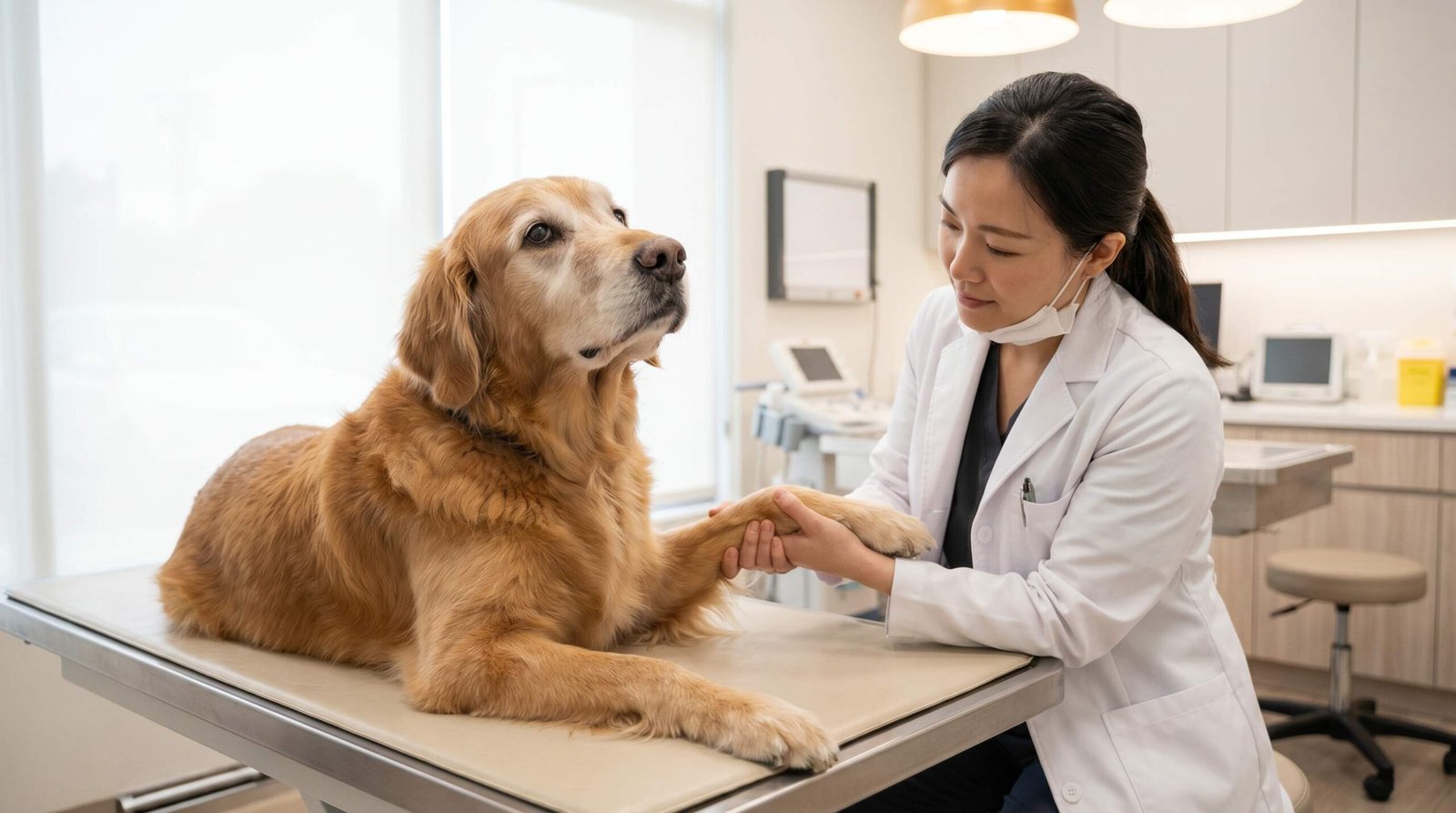
Gabapentin shows up on more senior dog prescription labels every year. Your veterinarian may have just sent you home with a bottle for arthritis pain, post-op recovery, vet visit anxiety, or as part of a seizure management plan. The drug is genuinely useful, but the honest clinical picture has more nuance than most consumer articles admit. This guide walks through how gabapentin works, what the veterinary research actually supports, where the evidence is thinner than you might expect, and the safety details that matter most, including a liquid-form warning that can save your dog’s life.
Quick answer: Gabapentin is an anticonvulsant and nerve-pain medication used off-label in dogs to manage chronic and neuropathic pain, adjunctive seizure control, and situational anxiety such as vet visits or fireworks. It is widely prescribed and generally well tolerated. Critical safety note: never give your dog human liquid gabapentin oral solution, which contains xylitol and can be fatal to dogs.
What Is Gabapentin and How Does It Work in Dogs?
Gabapentin was originally developed in the 1990s as a human antiepileptic drug, marketed under the brand name Neurontin. Veterinarians began using it off-label decades ago, first for refractory seizures and then for chronic pain conditions. Today it is one of the most commonly prescribed medications in small animal practice for senior dogs.
Structurally, gabapentin is a synthetic analogue of gamma-aminobutyric acid (GABA), the brain’s primary inhibitory neurotransmitter. Despite that design, gabapentin does not actually bind to GABA receptors. Its main mechanism of action involves binding to the alpha-2-delta subunit of voltage-gated calcium channels in the central nervous system. By dampening calcium influx into overactive neurons, gabapentin reduces the release of excitatory neurotransmitters like glutamate and substance P. In plain terms, it quiets down nerves that are firing too much, which is why it works for both seizure activity and chronic nerve pain. A 2023 review by Di Cesare and colleagues on the clinical use and pharmacokinetics of gabapentin in dogs, cats, and horses summarizes the current understanding of this mechanism in veterinary patients.
Off-Label Status in Dogs
Gabapentin is not approved by the U.S. Food and Drug Administration for use in dogs. It is a human medication prescribed off-label, meaning veterinarians extrapolate dosing and indications from a combination of human pharmacology, veterinary clinical experience, and a growing body of veterinary studies. Off-label prescribing is legal, common, and ethically standard in veterinary medicine, where FDA-approved animal medications cover only a fraction of clinical needs. Per the American Kennel Club, gabapentin remains one of the most widely used off-label medications in canine practice.
What Vets Use Gabapentin for in Dogs
Gabapentin is prescribed for four broad clinical categories in dogs. The strength of evidence varies considerably between them, and the honest summary is that some indications are far better supported than others.
Chronic and Neuropathic Pain
This is where gabapentin has its strongest clinical track record. Senior dogs with chronic joint pain in dogs, intervertebral disc disease, spinal cord injuries, cancer-related neuropathic pain, and pain from hip dysplasia are commonly placed on gabapentin as an adjunct to NSAIDs or other analgesics. The Di Cesare review notes gabapentin is useful for chronic and neuropathic pain in dogs, often as part of a multimodal pain protocol rather than monotherapy. Many vets reach for gabapentin specifically when pain has a burning, shooting, or hypersensitivity quality, which suggests nerve involvement rather than purely inflammatory pain.
Seizures (Adjunctive Therapy)
Gabapentin is used in dogs with epilepsy whose seizures are not adequately controlled by first-line anticonvulsants such as phenobarbital, potassium bromide, levetiracetam, or zonisamide. It is rarely used as a sole agent. The evidence base for gabapentin in canine epilepsy is modest, and it is generally considered a third or fourth-line add-on. The American Kennel Club confirms gabapentin’s use as adjunctive therapy for refractory seizures.
Situational Anxiety
For events with a known trigger and a defined window, vet appointments, car rides, thunderstorms, fireworks, fear-free handling protocols, gabapentin has become a frequent choice. It produces calm sedation without the cardiovascular effects of acepromazine and without the behavioral disinhibition some dogs experience on benzodiazepines. A retrospective evaluation published in 2024 in Animals (PMC11117262) looking at gabapentin for behavioral disorders in dogs supports the drug’s role in managing situational anxiety, though the authors emphasize it is not a substitute for behavior modification in dogs with generalized anxiety in dogs.
Post-Operative and Acute Pain (Mixed Evidence)
This is where the honest article diverges from the breezy ones. Gabapentin has been widely adopted as part of post-operative pain protocols, often added to opioids and NSAIDs in the hope of reducing opioid requirements or improving comfort. The 2023 Di Cesare review and other veterinary pain literature point out that the evidence for gabapentin’s benefit in acute and post-operative pain in dogs is limited and inconsistent. Some controlled studies show modest pain-score improvements, while others find no measurable benefit beyond standard analgesia. The current honest position: gabapentin may help in selected acute pain cases, particularly those with a neuropathic component, but it should not be assumed to add value to every surgical recovery. Talk to your veterinarian about why it is being used and what specific outcome you should expect.
Gabapentin Dosage for Dogs: Weight-Based Chart
Dosing in dogs varies widely by indication, body weight, kidney function, and individual response. There is no single “correct” dose. What follows is a reference table of commonly prescribed ranges drawn from veterinary pharmacology sources including the Di Cesare clinical review and VCA Hospitals. These ranges are not prescriptions. All dosing for your individual dog must be directed by your veterinarian.
Commonly Prescribed Gabapentin Dose Ranges in Dogs
| Body Weight | Chronic Pain (5-10 mg/kg q8-12h) | Situational Anxiety (single dose, 10-30 mg/kg, 2 hours before event) | Seizure Adjunct (10-20 mg/kg q8h) |
|---|---|---|---|
| 5 kg (~11 lb) | 25-50 mg every 8-12 hours | 50-150 mg single dose | 50-100 mg every 8 hours |
| 10 kg (~22 lb) | 50-100 mg every 8-12 hours | 100-300 mg single dose | 100-200 mg every 8 hours |
| 15 kg (~33 lb) | 75-150 mg every 8-12 hours | 150-450 mg single dose | 150-300 mg every 8 hours |
| 20 kg (~44 lb) | 100-200 mg every 8-12 hours | 200-600 mg single dose | 200-400 mg every 8 hours |
| 25 kg (~55 lb) | 125-250 mg every 8-12 hours | 250-750 mg single dose | 250-500 mg every 8 hours |
| 30+ kg (~66+ lb) | 150-300+ mg every 8-12 hours | 300-900+ mg single dose | 300-600+ mg every 8 hours |
Footnote: All dosing must be prescribed by a veterinarian. Doses should be reduced in dogs with renal impairment because gabapentin is excreted largely unchanged by the kidneys. Start-low-go-slow is the typical approach for chronic pain, with upward titration over days to weeks.
Frequency and Titration Notes
For chronic pain, most vets begin at the lower end of the range and titrate up every 5 to 7 days based on response and sedation. The plasma half-life of gabapentin in dogs is short, roughly 3 to 4 hours, which is why three-times-daily dosing is often more effective than twice-daily for steady pain control. For epilepsy, q8h dosing is standard. For single-event anxiety, a one-time dose two to three hours before the event is typical, sometimes with a smaller priming dose the night before.
Critical disclaimer: These ranges describe what veterinarians commonly prescribe, drawn from peer-reviewed pharmacology and pain management literature. They are not dosing instructions for your dog. Your vet sets the dose based on weight, condition, concurrent medications, kidney function, and clinical response. Never adjust your dog’s dose without veterinary guidance.
What Form to Give Your Dog (and the Critical Xylitol Warning)
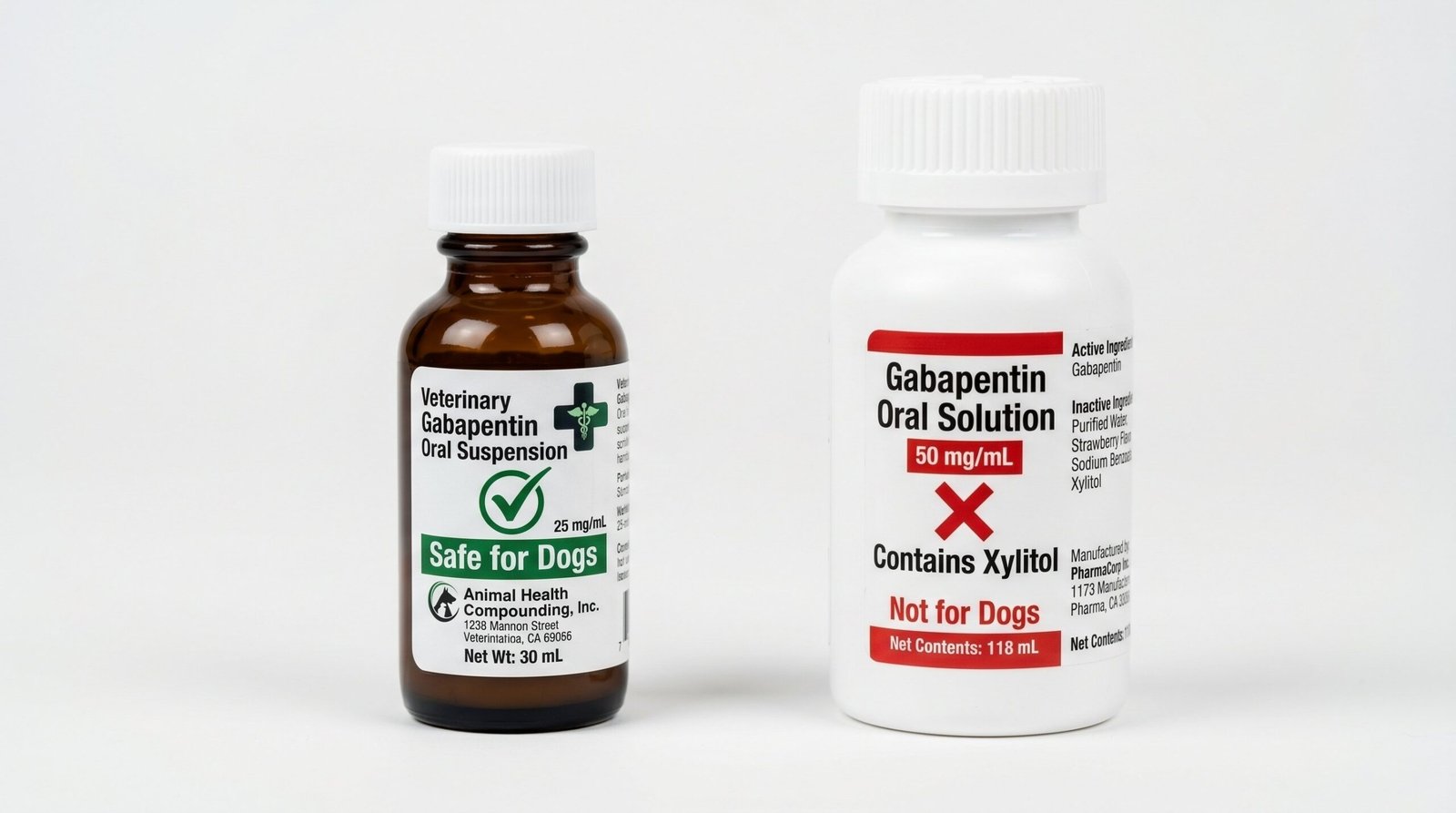
Gabapentin comes in several formulations. The form your vet chooses matters more than most owners realize, because one common human formulation can be lethal to dogs.
Capsules: The Standard
Gabapentin capsules in 100 mg, 300 mg, and 400 mg strengths are the most common form prescribed. They are inexpensive, safe, and easy to administer hidden in food. Capsules can be opened and the powder mixed into a small amount of palatable food for picky dogs, though the powder is bitter.
Tablets
Tablets in 600 mg and 800 mg strengths are usually reserved for larger dogs on higher doses. They can be split or crushed if needed, with the same bitterness caveat.
The Liquid Gabapentin Warning: Xylitol Toxicity
DO NOT give your dog commercial human liquid gabapentin oral solution. Human gabapentin oral solution, including the brand-name Neurontin oral solution and many generic equivalents, is sweetened with xylitol. Xylitol is severely toxic to dogs. Even small amounts can trigger acute hypoglycemia within 30 to 60 minutes. Larger amounts (typically above 500 mg/kg) can cause acute hepatic necrosis and fatal liver failure, according to the ASPCA Animal Poison Control Center.
This is one of the most under-discussed patient safety issues in canine pharmacology. A well-meaning owner or pharmacist swapping a capsule prescription for the “easier” liquid version can hospitalize or kill a dog. Veterinarians prescribe capsules, tablets, or specially compounded liquids for this exact reason. If a pharmacy ever offers you a sweetened oral solution for your dog, stop and call your veterinarian first.
Signs of xylitol toxicity include vomiting, weakness, ataxia, collapse, and seizures. If your dog has been given any human liquid gabapentin, contact your veterinarian or the ASPCA Animal Poison Control Center at 888-426-4435 immediately. Do not wait for symptoms.
Compounded Liquid Gabapentin (the Safe Alternative)
For dogs that cannot swallow capsules, veterinary compounding pharmacies can prepare xylitol-free liquid gabapentin in palatable flavors such as chicken, beef, or fish. Compounded suspensions typically use a glycerin or simple syrup base without artificial sweeteners. This is the safe way to use a liquid form. Always confirm with the compounding pharmacy that the formulation is xylitol-free and labeled for veterinary use.
Flavored Chews and Treats
Some compounding pharmacies also offer gabapentin in flavored chewable formulations. These are convenient but generally more expensive and may be less precise than capsules. For dogs taking gabapentin long-term, the additional cost can be worthwhile if it improves compliance.
Gabapentin Side Effects in Dogs
Gabapentin has a wide safety margin and is generally well tolerated, which is part of why it is so widely prescribed. The most common side effects are dose-related and tend to attenuate over the first one to two weeks of treatment as the nervous system adapts. Serious adverse effects are rare.
Side Effects Comparison Table
| Category | Side Effect | Typical Course | What to Do |
|---|---|---|---|
| Common | Sedation, drowsiness, sleepiness | Most pronounced first 1-7 days, usually resolves within 1-2 weeks | Wait it out; if persistent, ask vet about dose reduction |
| Common | Ataxia (wobbling, swaying, loss of coordination) | Dose-related; usually improves with continued use or dose reduction | Restrict stairs and slippery floors; contact vet if severe |
| Common | Mild GI upset (occasional vomiting, soft stool) | Often improves when given with food | Give with a small meal; contact vet if persistent |
| Uncommon | Paradoxical excitement or restlessness | Variable; idiosyncratic | Contact vet; may require alternative medication |
| Uncommon | Polyphagia (increased appetite) | Persistent while on therapy | Monitor weight; consider portion control |
| Rare/Serious | Severe ataxia or weakness suggesting overdose | Acute | Contact vet or emergency clinic immediately |
| Rare/Serious | Hepatic enzyme elevation (long-term high-dose use) | Insidious; detected on bloodwork | Discuss monitoring schedule with vet |
| Rare/Serious | Severe allergic reaction (facial swelling, hives, dyspnea) | Acute | Emergency veterinary care immediately |
Sedation and Ataxia: The Most Common Concerns
According to VCA Hospitals, sedation and ataxia are the most frequently reported side effects of gabapentin in dogs. Both are usually most pronounced after the first dose and during the first week of treatment. Many dogs become noticeably steadier within 7 to 14 days. If your senior dog seems unusually wobbly on the stairs or wants to sleep through dinner during the initial period, this is typically expected and self-limiting. If it persists beyond two weeks or worsens, your vet may reduce the dose.
GI Effects
Vomiting and diarrhea are less common than sedation but do occur. Giving gabapentin with food usually resolves the issue. If your dog vomits the capsule shortly after dosing, contact your vet rather than re-dosing.
Paradoxical Reactions
A small subset of dogs become more restless or agitated on gabapentin rather than calmer. This is uncommon but documented. If your dog’s anxiety appears to worsen on gabapentin, do not continue the medication for that purpose; call your vet to discuss alternatives such as trazodone for dogs.
Long-Term Considerations
For dogs on chronic gabapentin therapy, periodic bloodwork is reasonable. While severe hepatic effects are rare, monitoring kidney function is particularly important because gabapentin clearance depends on renal excretion. Dogs with chronic kidney disease will accumulate the drug at standard doses and require dose reduction.
Drug Interactions: What NOT to Combine with Gabapentin
Gabapentin is metabolically clean compared with many psychoactive medications. It is not significantly metabolized by the cytochrome P450 system in dogs, which means it has fewer pharmacokinetic interactions than drugs like phenobarbital or fluoxetine. The clinically meaningful interactions fall into a few categories.
Drug Interaction Severity Table
| Drug or Class | Interaction | Severity | What to Do |
|---|---|---|---|
| Opioids (hydrocodone, tramadol, morphine, buprenorphine) | Additive CNS depression and sedation; hydrocodone may increase gabapentin blood levels | Moderate | Useful combination for pain; monitor for excess sedation; dose reduction may be needed |
| Trazodone | Additive sedation | Moderate | Commonly co-prescribed for anxiety; monitor closely on first combined dose |
| Acepromazine | Marked additive sedation and possible hypotension | Moderate to High | Reserve combined use for veterinary supervision |
| Antihistamines (diphenhydramine, hydroxyzine) | Additive sedation | Mild to Moderate | Anticipate increased drowsiness |
| Antacids (omeprazole/Prilosec, famotidine/Pepcid, aluminum hydroxide) | Reduce gabapentin absorption by up to 20% when given together | Mild to Moderate | Separate doses by at least 2 hours |
| NSAIDs (carprofen, meloxicam, grapiprant) | No direct pharmacokinetic interaction; commonly co-prescribed for arthritis | Low | Standard multimodal pain therapy; monitor for cumulative GI effects |
| Benzodiazepines (diazepam, alprazolam) | Additive CNS depression | Moderate | Use combined doses with vet supervision |
| Morphine/hydromorphone (perioperative) | Pharmacokinetic studies show altered gabapentin clearance | Moderate | Vet should adjust perioperative dosing |
The Antacid Interaction Most Senior Dog Owners Miss
Many senior dogs are on omeprazole (Prilosec), famotidine (Pepcid), or aluminum-magnesium antacids for chronic GI conditions, gastroesophageal reflux, or NSAID gastroprotection. These medications can meaningfully reduce gabapentin absorption when given together. Per VCA Hospitals, gabapentin should be given at least 2 hours before or after antacids. If your dog is on both, set a clear schedule with your vet to avoid blunting the gabapentin effect.
The NSAID Question
Combining gabapentin with NSAIDs such as carprofen, meloxicam, or grapiprant is a standard multimodal approach to pain medication for dogs with arthritis. The two drugs work through different mechanisms (anti-inflammatory plus calcium channel modulation) and there is no direct pharmacokinetic interaction. The combination is generally safe under veterinary supervision. The cumulative GI concern arises if the gabapentin is delivered as a xylitol-containing liquid, which compounds an already risky situation; this is one more reason to use capsules or compounded forms.
How to Stop Gabapentin Safely: The Tapering Protocol
This is the section most consumer articles skip entirely. Abrupt discontinuation of gabapentin after weeks or months of use is not safe, and most dog owners are not warned about it at the time of prescription.
Why Abrupt Discontinuation Is Risky
When the nervous system has adapted to gabapentin’s calcium channel modulation, sudden withdrawal can produce rebound effects. In dogs, the most commonly reported issues include:
- Rebound hypersensitivity to pain (pain that was previously controlled returns more intensely)
- Increased anxiety or restlessness
- In epileptic dogs, breakthrough seizures or status epilepticus
- Tremors, insomnia, or behavioral changes
The risk is greatest in dogs who have been on gabapentin daily for more than a few weeks at therapeutic doses. According to clinical pharmacology guidance reflected in sources such as Wedgewood Pharmacy and confirmed by veterinary neurology specialists, gabapentin should not be stopped abruptly in dogs with epilepsy because of the risk of withdrawal seizures.
A General Tapering Approach
Tapering should always be directed by your veterinarian. A common approach is:
- Reduce the total daily dose by approximately 25 percent every 1 to 2 weeks
- Aim for a total taper period of at least 3 to 4 weeks for dogs on chronic therapy
- Slower tapers (6 to 8 weeks) for dogs on high doses, on long-term therapy (more than 6 months), or with seizure disorders
- Maintain the dosing frequency while reducing the per-dose amount
- Watch for rebound pain, anxiety, or seizure activity at each step
If breakthrough symptoms emerge during the taper, the previous dose level is held until things stabilize, then the taper resumes more slowly.
Signs to Watch For During a Taper
Increased panting or restlessness, return of joint stiffness or limping, vocalizing, reluctance to settle at night, or in epileptic dogs any sign of preictal behavior such as staring, pacing, or focal twitching. Any of these warrant a call to your vet before the next dose reduction.
Gabapentin vs Trazodone for Dogs: Which Is Right for Your Pet?
Owners often ask their vet about trazodone for dogs versus gabapentin, especially for situational anxiety. The two drugs work through entirely different mechanisms and have different best-use cases.
Gabapentin vs Trazodone Comparison
| Feature | Gabapentin | Trazodone |
|---|---|---|
| Drug class | Anticonvulsant / calcium channel modulator (alpha-2-delta ligand) | Serotonin antagonist and reuptake inhibitor (SARI) |
| Primary uses in dogs | Chronic pain, neuropathic pain, adjunctive seizure control, situational anxiety | Situational anxiety, post-operative confinement, behavioral anxiety |
| Pain control | Yes (especially neuropathic pain) | No direct analgesic effect |
| Onset of effect | 1-3 hours after oral dose | 1-2 hours after oral dose |
| Duration of effect | 6-8 hours typical | 4-8 hours typical |
| Common side effects | Sedation, ataxia, occasional GI upset | Sedation, panting, occasional GI upset, rare paradoxical agitation |
| Liquid form safety | Human oral solution contains xylitol (do not use); capsules or compounded liquid only | Tablet form standard; no xylitol issue |
| Pre-event use | Useful, often combined with trazodone | Standard choice for behavioral anxiety alone |
| Best fit scenario | Senior dog with arthritis pain plus vet-visit anxiety | Young or middle-aged dog with thunderstorm anxiety and no pain |
When Vets Choose Gabapentin
Gabapentin is the right tool when there is a pain component to the picture. A senior Labrador with arthritis who also panics at the vet is a textbook case: one drug addresses both the chronic pain and the situational anxiety. Gabapentin is also the choice when adjunctive seizure control is needed alongside calming for travel or boarding.
When Vets Choose Trazodone
For purely behavioral situational anxiety, fireworks, thunderstorms, separation events, vet visits in an otherwise pain-free dog, trazodone is often the first choice. It has faster onset of behavioral calming effects without ataxia at typical doses.
When Both Are Used Together
The combination is common in clinical practice, particularly for high-anxiety dogs undergoing veterinary procedures or recovering from orthopedic surgery. Because both drugs are CNS depressants, the combination produces additive sedation and lower doses of each are often used. Owners should always inform the vet of any other CNS-active medications, including anxiety in dogs protocols that may already be in place.
When You Should Not Give Gabapentin to Your Dog
While gabapentin has a wide safety margin, there are clinical situations where it should be used with extra caution or avoided.
- Severe kidney disease: Gabapentin is excreted unchanged by the kidneys. Dogs with impaired renal function will accumulate the drug at standard doses, increasing sedation and ataxia. Dose reduction is essential; some dogs with end-stage kidney disease should not receive it at all.
- Significant liver disease: Although gabapentin is not heavily metabolized by the liver, dogs with advanced hepatic disease have less reserve to handle any drug, and concurrent ascites or hepatic encephalopathy can be worsened by sedation. We suggest discussing dosing carefully with your vet in these cases.
- Pregnancy and lactation: Safety data are limited. Gabapentin crosses the placenta and is excreted in milk. Use only when benefits clearly outweigh risks.
- Known hypersensitivity: Rare, but documented.
- Very young puppies: Pharmacokinetic data are limited in puppies under 8 weeks.
- Dogs receiving multiple CNS depressants: The cumulative sedation can become dangerous, particularly in seniors with mobility limitations.
Storage, Cost, and Practical Tips
Gabapentin should be stored at room temperature in a tightly closed container, away from moisture and heat. Capsules and tablets are stable for years; compounded liquids typically have shorter beyond-use dates of 30 to 90 days depending on the formulation. The drug is inexpensive, generic 100 mg capsules cost a few dollars for a monthly supply at most pharmacies, which makes it an accessible long-term option for senior dog pain management.
Practical tips: Give with a small amount of food to reduce GI upset and improve absorption consistency. Set a reliable schedule using phone alarms; three-times-daily dosing is easy to miss. Never share dosing units between dogs; the per-kilogram dose varies and one dog’s safe dose can be another dog’s overdose. Always confirm with the dispensing pharmacy that any liquid formulation is xylitol-free.
Frequently Asked Questions About Gabapentin for Dogs
Can I give my dog human gabapentin?
Capsules and tablets of human gabapentin are commonly prescribed to dogs by veterinarians and are safe at vet-directed doses. However, you must never give your dog human liquid gabapentin oral solution. The human oral solution contains xylitol, an artificial sweetener that is severely toxic to dogs. Even small amounts can cause hypoglycemia within 30 to 60 minutes, and larger amounts can cause acute liver failure. Per the ASPCA Animal Poison Control Center, xylitol poisoning is a true emergency. For dogs that need a liquid form, ask your vet for a compounded xylitol-free preparation from a veterinary pharmacy.
How long does gabapentin take to work in dogs?
Gabapentin reaches peak blood concentrations approximately 1 to 3 hours after an oral dose in dogs. For situational anxiety, the typical strategy is to give the dose 2 hours before the expected stressful event. For chronic pain, you may notice initial reduction in discomfort within the first 24 to 72 hours, but full benefit often takes 1 to 2 weeks as the dose is titrated and the nervous system adapts. If you do not see meaningful improvement after 2 weeks at an adequate dose, talk to your vet about dose adjustment or alternative analgesics.
Can gabapentin make my dog worse?
In some cases, yes. A small number of dogs experience paradoxical excitement or agitation rather than calming. Others may experience excessive sedation, ataxia that interferes with mobility, or persistent GI upset. Abrupt discontinuation after chronic use can cause rebound pain, anxiety, or in epileptic dogs, breakthrough seizures. If your dog seems worse on gabapentin, contact your veterinarian rather than continuing or stopping abruptly.
What are the signs of gabapentin overdose in dogs?
Signs of gabapentin overdose include severe sedation that progresses to stupor, marked ataxia, inability to stand, vomiting, hypothermia, and slowed breathing. While gabapentin has a wide safety margin and most overdoses recover with supportive care, large accidental ingestions should be treated as a veterinary emergency. Call your veterinarian or the ASPCA Animal Poison Control Center at 888-426-4435 right away. If the overdose involved a xylitol-containing human liquid formulation, the situation is far more dangerous due to xylitol toxicity rather than the gabapentin itself.
Can my dog take gabapentin with anti-inflammatories?
Yes. Combining gabapentin with NSAIDs such as carprofen, meloxicam, or grapiprant is a standard multimodal approach for arthritis and chronic pain in senior dogs. The two drug classes work through different mechanisms and have no direct pharmacokinetic interaction. Your vet may pair them deliberately for better pain control than either alone. Monitor your dog for GI signs and ensure baseline kidney and liver bloodwork has been performed.
When should I not give gabapentin to my dog?
Gabapentin should be used with significant caution or avoided in dogs with severe kidney disease (because the drug is renally cleared), advanced liver disease, known hypersensitivity to gabapentin, pregnancy or lactation (limited safety data), or in dogs receiving multiple other CNS depressants where cumulative sedation could be dangerous. Always disclose your dog’s full medication and supplement list to your vet before starting gabapentin.
How do I taper my dog off gabapentin?
Always under veterinary direction. A typical approach reduces the total daily dose by approximately 25 percent every 1 to 2 weeks, with the full taper extending over 3 to 4 weeks minimum for dogs on chronic therapy. Longer tapers of 6 to 8 weeks are appropriate for dogs on high doses, on long-term therapy of more than 6 months, or with seizure disorders. Watch for rebound pain, anxiety, or any seizure activity, and pause the taper at the previous step if symptoms emerge.
Is gabapentin addictive for dogs?
Gabapentin is not a controlled substance at the federal level in the United States, though several states have scheduled it due to growing concern about human misuse. In dogs, it does not produce reward-seeking behavior or psychological dependence in the way opioids can. Physical dependence in the sense of withdrawal symptoms on abrupt discontinuation is real, however, which is why tapering matters. The medication is appropriate for chronic use in dogs when clinically indicated.
Can my dog stay on gabapentin long-term?
Yes. Many dogs with chronic arthritis, neuropathic pain, or epilepsy stay on gabapentin for months to years. Long-term therapy is generally well tolerated. Periodic veterinary checkups with bloodwork (typically every 6 to 12 months) help monitor kidney function and overall response. Dose adjustments over time are common as the condition progresses or as concurrent medications change.
Will gabapentin sedate my dog every time, or just at first?
Most dogs experience the most pronounced sedation during the first 1 to 7 days of therapy, with significant improvement by 1 to 2 weeks as tolerance develops. Many senior dogs on chronic gabapentin show only mild residual drowsiness or none at all after the adjustment period. If sedation persists or limits your dog’s quality of life beyond 2 weeks, ask your vet about a dose reduction or alternative analgesic.
What to Take Away
Gabapentin earned its place in canine pharmacology by being broadly useful, generally well tolerated, and inexpensive. It is most strongly supported for chronic neuropathic pain and adjunctive seizure control, and increasingly for situational anxiety. The evidence for acute post-operative pain benefit is weaker than the prescription frequency might suggest, and your vet should be able to explain why your particular dog is receiving it.
The two safety issues that matter most are easy to remember. Never give human liquid gabapentin to a dog because of xylitol toxicity. Never stop chronic gabapentin abruptly because of rebound risk. Beyond those, follow your vet’s dosing schedule, separate it from antacids by at least two hours, and report any unusual side effects early rather than late. With those guardrails in place, gabapentin is one of the more reliable tools available for managing chronic discomfort in senior dogs.
RELATED POSTS
View all

Fish Oil for Dogs: Benefits, Dosage by Weight, and What the Research Actually Shows
December 22, 2023 | by seniorsniffs.com
Trazodone for Dogs: Uses, Dosage, Side Effects, and What the Research Actually Shows
December 22, 2023 | by seniorsniffs.com