Anxiety in Dogs: Causes, Types, and Treatment That Actually Works
Anxiety in dogs is a persistent state of apprehension or dread, triggered by an anticipated threat rather than a present one. Unlike momentary fear, clinical anxiety is disproportionate, chronic, and interferes with normal life. Common forms include separation anxiety, noise phobia, and age-related anxiety tied to cognitive decline or chronic pain.
What follows is a working guide built for owners who want more than reassurance. We cover the mechanisms, the medical mimics that masquerade as behavior problems, a step-by-step separation protocol, an honest grading of supplements, and a practical medication table. Senior dogs get their own section, because aging changes the picture in ways most guides skip entirely.
What Is Anxiety in Dogs?
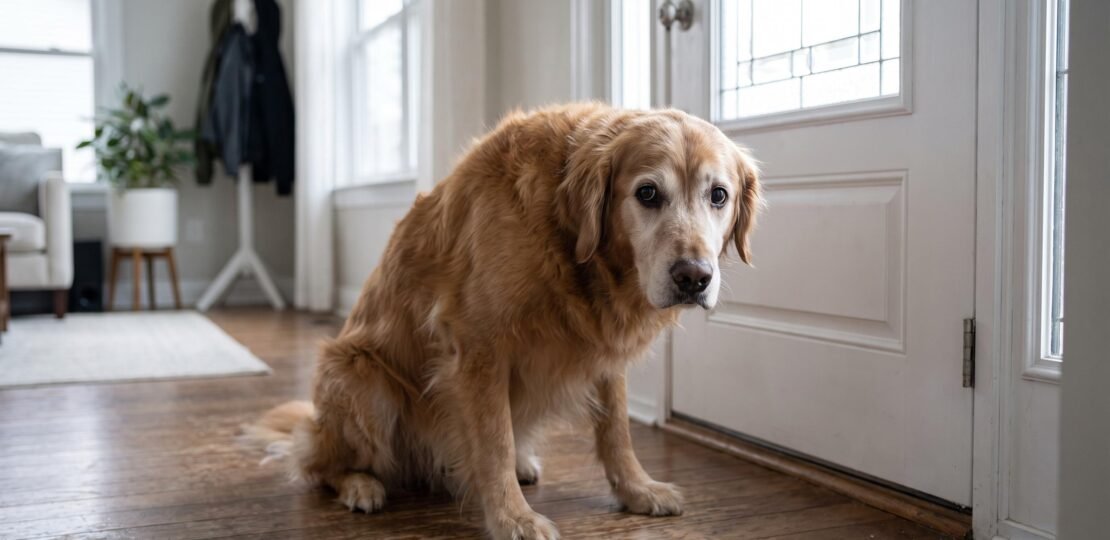
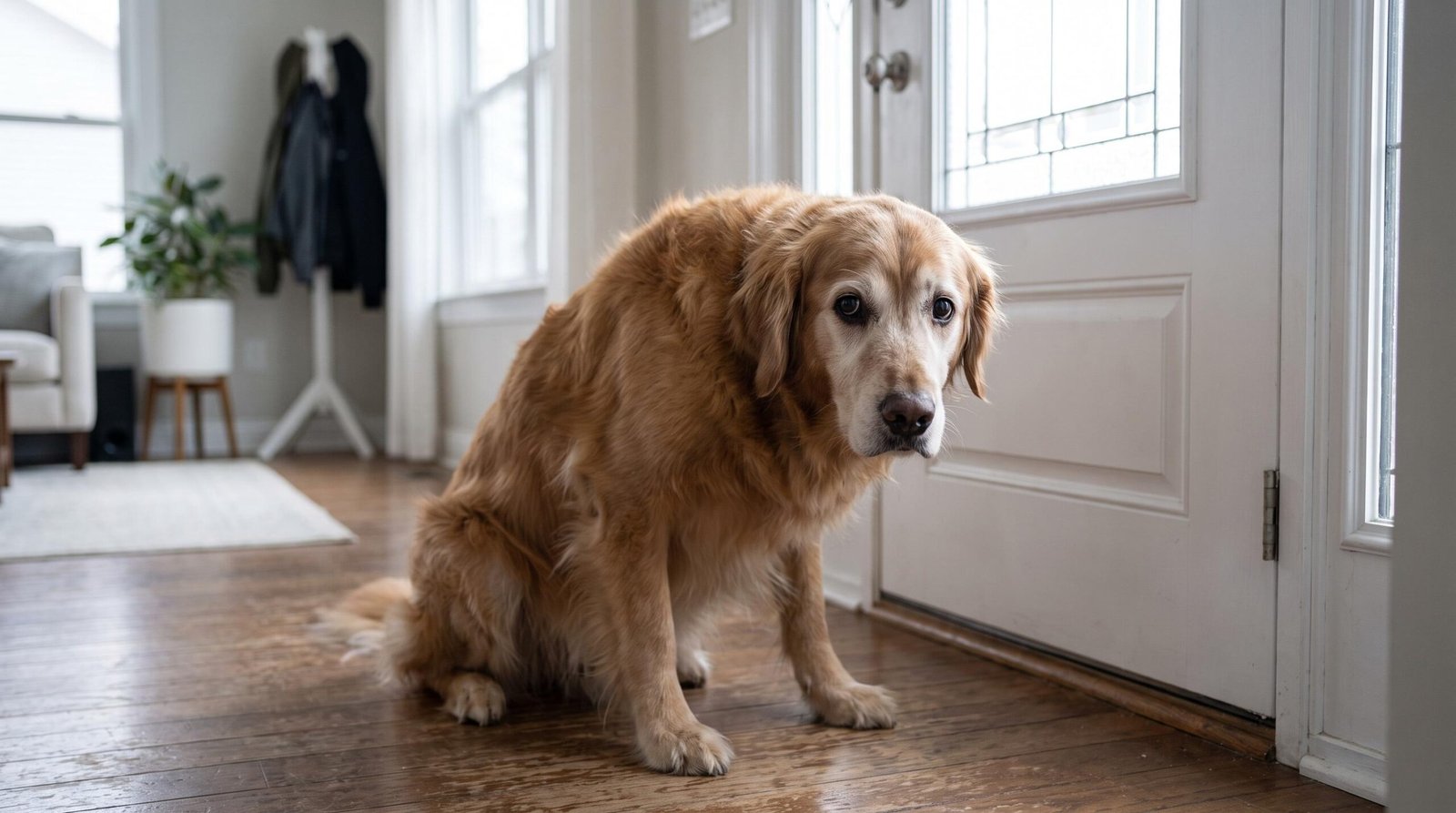
Anxiety is the anticipation of a threat. A dog does not need to see the mail carrier to feel dread; the sound of the truck two houses away is enough. That anticipatory quality separates anxiety from fear, which is a response to something happening right now. Both are normal survival responses in small doses. A dog that flinches at a thunderclap and then settles is behaving normally. A dog that paces, drools, and refuses food for hours before a storm even arrives has crossed into disorder.
The clinical line is drawn at proportion, duration, and interference. Occasional wariness of a stranger is adaptive. A response that is out of scale with the trigger, lasts long after the trigger is gone, and disrupts eating, sleeping, or the human-animal bond is a clinical anxiety disorder. According to the Cornell University College of Veterinary Medicine, anxious behavior becomes a welfare concern when it is frequent, intense, or prevents a dog from coping with ordinary situations.
Prevalence estimates vary widely because separation-related behavior often happens when no one is watching. Large owner-reported surveys place separation anxiety somewhere between 13 and 20 percent of dogs, and the figure of roughly 14 percent is the one most commonly cited in the veterinary literature and by the American Kennel Club. Stricter diagnostic criteria pull the number lower, closer to 5 to 9 percent. Either way, this is not a rare problem confined to a handful of high-strung dogs. It is one of the most common behavioral complaints veterinarians see.
Types of Anxiety in Dogs
Anxiety is not a single condition. It presents in distinct patterns, each with its own triggers, prognosis, and treatment path. Getting the type right is the first step, because the protocol for separation anxiety looks nothing like the protocol for noise phobia or the management plan for a cognitively declining senior.
Separation Anxiety
Separation anxiety is distress that appears specifically when a dog is left alone or separated from a particular person. It is the most common anxiety disorder in dogs, affecting an estimated 14 percent of the population. The hallmark is that the behavior, whether vocalizing, destruction, house soiling, or escape attempts, is tied to absence and typically begins within the first 30 minutes after departure.
One of the most useful diagnostic clues is a set of predictive behaviors that appear before the owner even leaves. Dogs with separation anxiety learn the departure routine. They watch you pick up keys, put on shoes, or reach for a coat, and the anxiety spirals upward before the door has opened. The ASPCA separation anxiety guidelines describe this pre-departure escalation as a defining feature that distinguishes true separation anxiety from boredom or under-exercise.
The prognosis is genuinely encouraging when treatment is structured. A Sargisson 2014 systematic review of canine separation anxiety found that a large share of dogs respond quickly to combined behavior modification and, where indicated, medication, with meaningful improvement reported in a substantial proportion of dogs within the first week of treatment and continued gains over the following weeks. Separation anxiety is not a life sentence. It is a treatable disorder with a well-mapped path.
Fear-Based Anxiety
Fear-based anxiety is anchored to specific triggers. The most common are loud noises, thunderstorms and fireworks chief among them, but the category also includes strangers, unfamiliar dogs, veterinary visits, car rides, and specific surfaces or environments. Noise phobia deserves particular attention because it is both widespread and progressive; dogs that show mild sound sensitivity often worsen with age if the response is repeatedly reinforced by panic.
What makes fear-based anxiety distinct is its predictability. The trigger is identifiable, which means desensitization and counterconditioning have a clear target. A dog terrified of the vacuum can be worked with methodically. The challenge is that many fear triggers, such as thunderstorms, come bundled with elements that are hard to control, including barometric pressure changes and static electricity that a dog may sense before any sound.
Age-Related Anxiety and Cognitive Dysfunction Syndrome
Older dogs develop a form of anxiety rooted in neurological change. Canine cognitive dysfunction syndrome, often abbreviated CDS or CCD, is the canine equivalent of age-related dementia, and it is far more common than most owners realize. Prevalence climbs steeply with age: studies report roughly 28 percent of dogs affected at 11 to 12 years, rising to 68 percent or higher by 15 to 16 years. Across the broad senior population, a substantial share, on the order of half of dogs over 10, show some degree of cognitive change.
The anxiety signature of CDS is distinct. Affected dogs pace at night, appear disoriented in familiar rooms, get stuck behind furniture, vocalize for no apparent reason after dark, and reverse their sleep-wake cycle. Many owners describe a dog that seems lost in its own home. We cover the full picture, including staging and management, in our guide to dog dementia. Recognizing CDS matters because the treatment path diverges sharply from other anxiety types, leaning on cognitive support, environmental structure, and specific medications rather than exposure-based training.
Pain-Induced Anxiety
This is the type that goes unrecognized most often, and it is critical. Chronic pain lowers a dog’s threshold for anxiety. A dog that hurts becomes hypervigilant, irritable, and reactive, not because its temperament has changed but because pain has recalibrated its nervous system toward defensiveness. Osteoarthritis is the classic culprit. A senior dog with painful joints may resist being touched, startle when approached, and pace because lying down has become uncomfortable, and every one of those behaviors reads as anxiety.
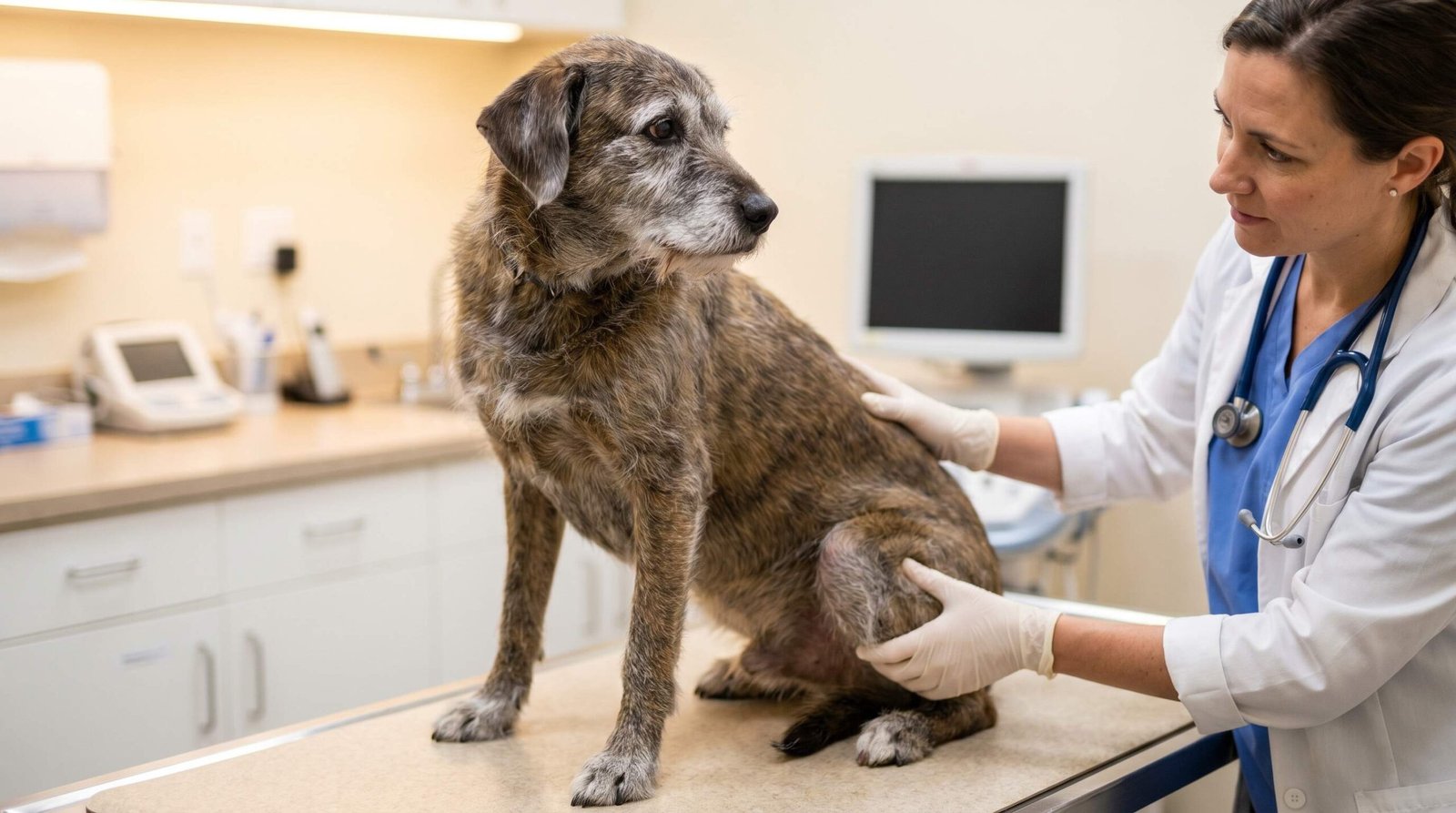
The two most common pain drivers in aging dogs are degenerative joint disease and hip instability. Our detailed guides to arthritis in dogs and hip dysplasia in dogs walk through recognition and management. The practical takeaway is blunt: a new onset of anxiety in an older dog should prompt a pain workup before anyone reaches for a behavior label. Pain is treatable, and treating it often resolves the anxiety that was mistaken for a psychological problem.
Signs of Anxiety in Dogs
Anxiety speaks through the body long before it escalates to destruction or vocalizing. Learning to read the early signals lets you intervene before a dog tips into full panic. The signs fall into three broad groups: body language, behavior, and physiological changes.
Body language signals. These are the quiet, early tells. Watch for a lowered body posture, tucked tail, ears pinned back, a tightly closed mouth or, conversely, rapid panting when it is not hot. A dog showing the whites of its eyes, the so-called whale eye, is signaling stress. Trembling, lip licking, and repeated swallowing round out the picture.
Displacement behaviors. These are normal actions performed out of context, and they are among the most reliable and most overlooked stress signals. A dog that yawns when it is not tired, sneezes with no irritant present, suddenly sniffs the ground during a tense encounter, or scratches when it does not itch is displaying displacement behavior. The Tufts Cummings School of Veterinary Medicine highlights these out-of-context behaviors as key indicators that a dog is trying to self-soothe under stress.
Behavioral signals. As anxiety intensifies, it drives more overt behavior: pacing, restlessness, clinginess, hiding, an inability to settle, and hypervigilance. In acute episodes you may see escape attempts, freezing, or defensive aggression when the dog feels cornered.
House soiling and destruction. Two behaviors are chronically misread as spite or disobedience. A house-trained dog that urinates or defecates indoors when left alone is not being vindictive; it is experiencing a physiological stress response. The same is true of destruction focused on exit points, doors, windows, and crates, which reflects panic and an attempt to escape, not a discipline failure. Reframing these behaviors as symptoms rather than defiance is essential to treating them humanely and successfully.
For a fuller catalogue with photographs and situational examples, see our dedicated guide to the signs of anxiety in dogs.
How Anxiety Affects Senior Dogs Differently
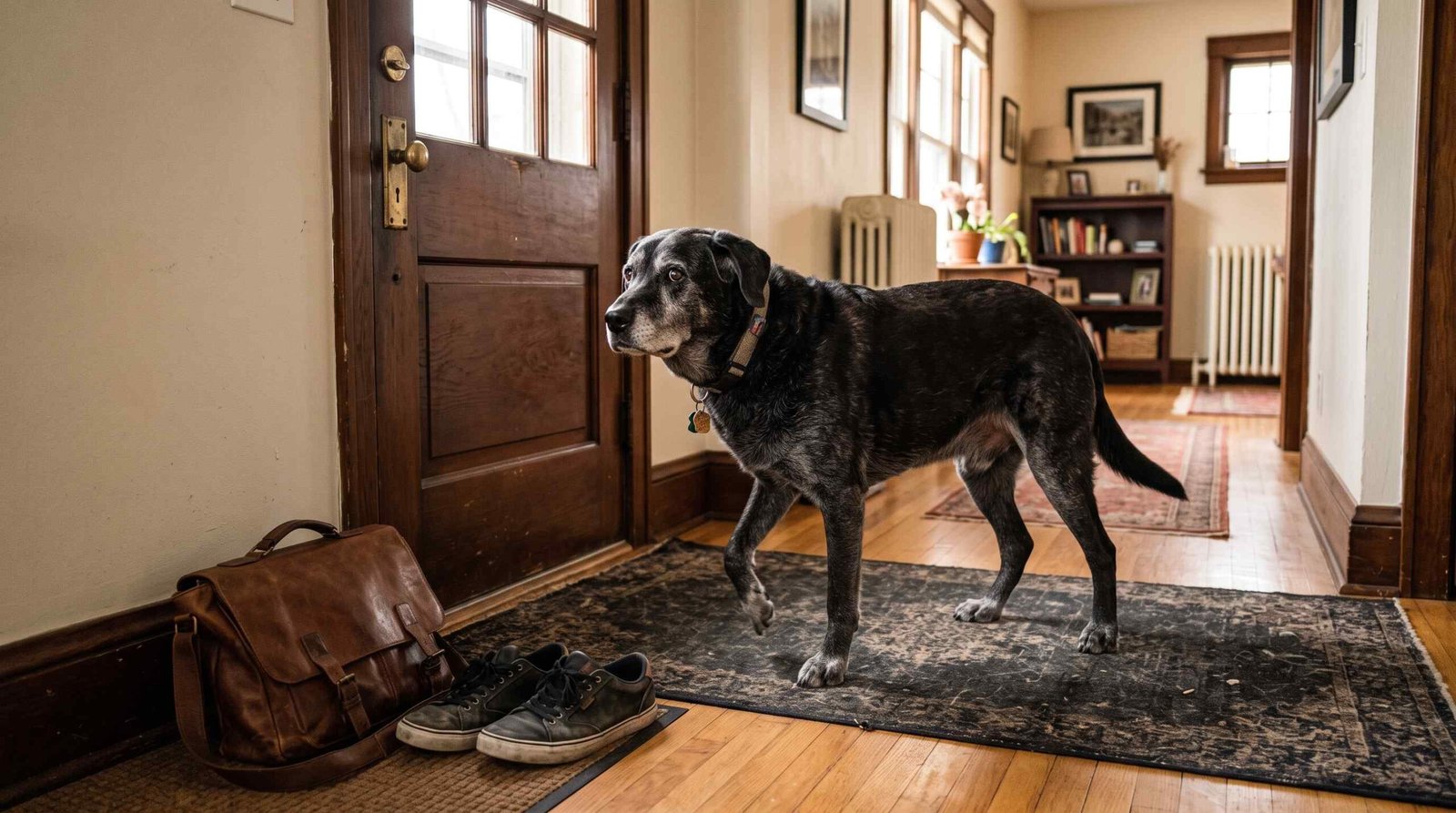
Aging rewrites the anxiety picture, and this is where generic advice fails older dogs. A senior dog’s anxiety is rarely just behavioral. It sits at the intersection of pain, cognitive decline, sensory loss, and medication effects, and untangling those threads is what separates good senior care from guesswork.
Chronic pain lowers the anxiety threshold. An older dog with arthritis or hip dysplasia lives with a nervous system tuned toward defensiveness. Persistent pain depletes the reserves a dog would otherwise use to cope with ordinary stressors, so events that a younger, comfortable dog would shrug off provoke pacing, panting, and reactivity. Pain does not just hurt; it makes everything else feel more threatening.
Cognitive dysfunction brings nighttime confusion. The disorientation of CDS often peaks after dark, a pattern that closely parallels sundowning in humans with dementia. Affected dogs wake, wander, vocalize, and appear frightened by rooms they have lived in for a decade. This is not stubbornness or attention-seeking. It is a brain struggling to orient itself, and it responds to structure and cognitive support rather than correction.
Vision and hearing loss make the familiar unpredictable. A dog that can no longer see or hear well loses the sensory cues that once made its home predictable. People and other pets seem to appear out of nowhere. A dog startled awake by a touch it did not hear coming may snap in pure reflex. The environment has not changed, but the dog’s ability to anticipate it has, and unpredictability is the engine of anxiety.
Some medications increase anxiety. Treatments prescribed for other senior conditions can worsen the picture. Corticosteroids, used for a range of inflammatory and immune conditions, are well known to cause restlessness, panting, and behavioral change. Certain other drugs can contribute as well. If anxiety appears or worsens after a new prescription, that timing is worth flagging to your veterinarian rather than dismissing as coincidence.
Anxious seniors are often misread as grumpy. Perhaps the costliest error is interpreting an older dog’s changes as a personality shift, labeling the dog difficult, grumpy, or set in its ways. More often the dog is anxious, uncomfortable, or cognitively adrift. That misreading delays diagnosis and denies the dog treatment that could restore its quality of life.
| Age-Related Change | How It Manifests as Anxiety |
|---|---|
| Osteoarthritis / hip dysplasia | Restlessness, reluctance to lie down, irritability when touched, pacing, startling when approached |
| Cognitive dysfunction (CDS) | Nighttime pacing and vocalizing, disorientation in familiar spaces, reversed sleep cycle, apparent fear of known rooms |
| Vision loss | Startling easily, hesitation in open spaces, clinginess, reluctance to move in dim light |
| Hearing loss | Startle-snapping when touched unexpectedly, increased vigilance, separation distress from losing auditory contact with owner |
| Medication effects (e.g., corticosteroids) | New or worsened panting, restlessness, and agitation appearing after a prescription change |
Ruling Out Medical Causes First
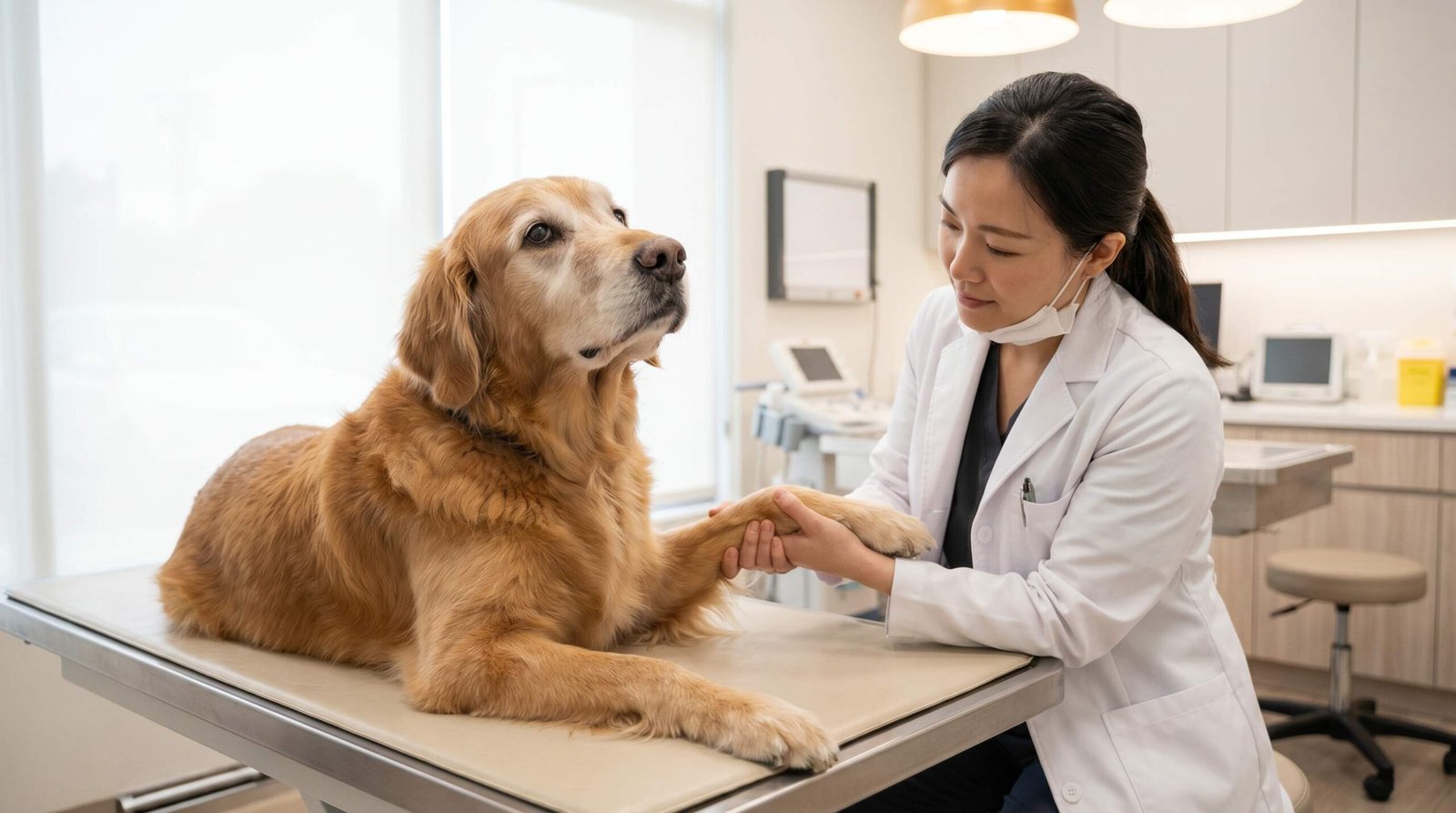
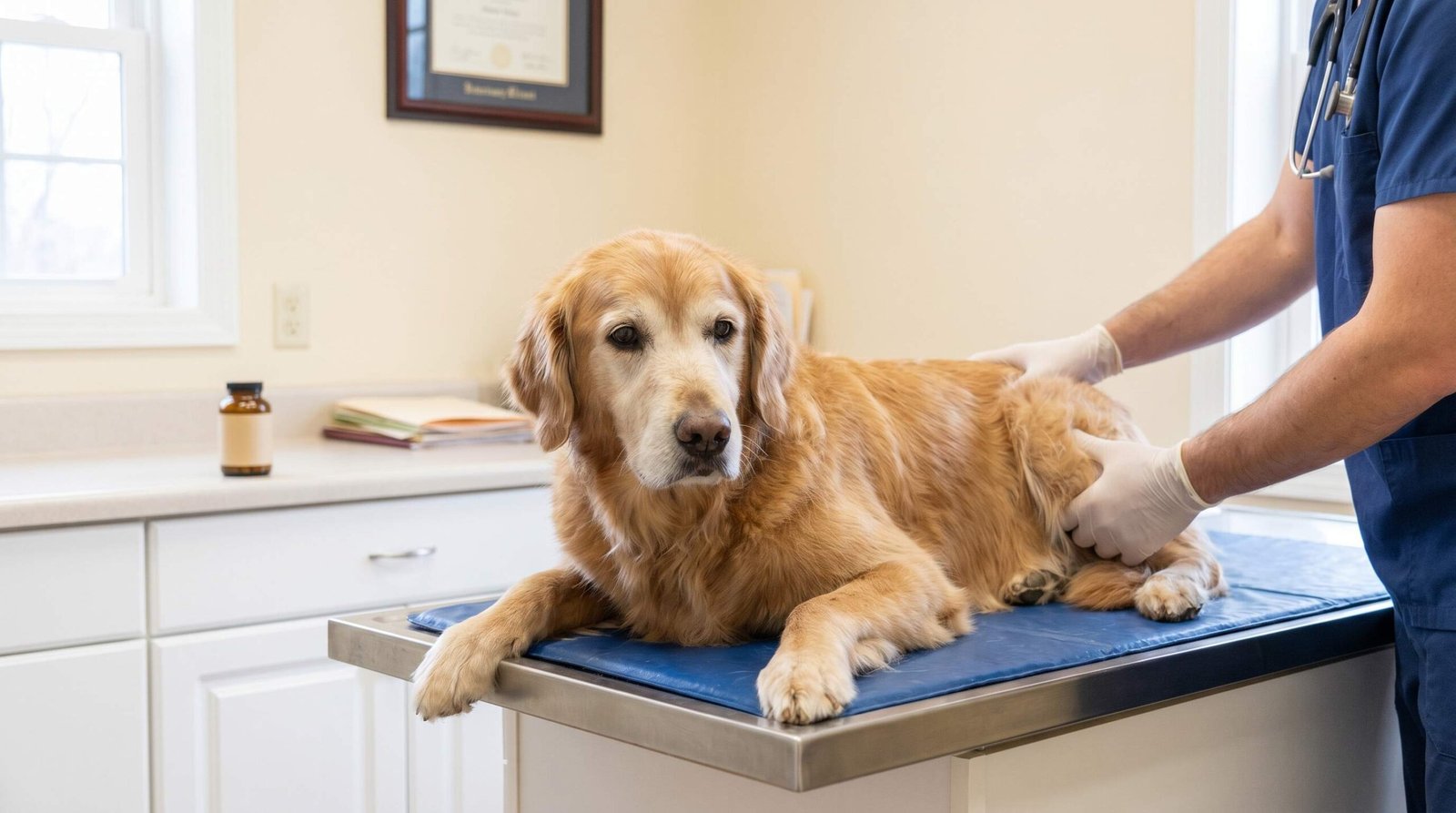
Before anyone commits to a behavior modification program, a medical workup should come first. Anxiety is a symptom, and in older dogs especially it is frequently the visible tip of an underlying physical condition. Treating the behavior while ignoring the cause is both ineffective and, in the case of pain, unkind. This is the content gap that most anxiety guides leave wide open, and it is arguably the most important section here.
Chronic pain. The single most common medical driver. Osteoarthritis, hip dysplasia, and dental disease all cause persistent, low-grade pain that dogs are evolutionarily wired to hide. Dental disease in particular is easy to miss and remarkably common in seniors. A thorough physical exam, orthopedic assessment, and dental evaluation belong at the top of the list.
Thyroid dysfunction. The thyroid connection cuts both ways. Hypothyroidism, the common form in dogs, is associated with lethargy but also with behavioral changes that can include anxiety-like signs and, in some dogs, reactivity. Hyperthyroidism is rare in dogs but produces genuine agitation and restlessness when it occurs. A simple blood panel screens for both.
Neurological conditions. Beyond CDS, several neurological problems present with anxiety-like behavior. Vestibular disease, which causes sudden loss of balance, head tilt, and disorientation, can look terrifying and leave a dog acutely distressed. Brain changes associated with aging, seizure disorders, and other central nervous system conditions can all manifest as apparent anxiety.
Medication side effects. As noted, corticosteroids and certain other drugs can produce or amplify anxious behavior. A careful medication history, including recent changes in dose, is part of any responsible workup.
The principle is simple and worth stating plainly: always see your veterinarian before starting behavior modification. A behavior plan built on top of undiagnosed pain or disease is a plan built on sand. Rule out the medical, then address the behavioral.
Behavior Modification: What Actually Works
Behavior modification is the foundation of anxiety treatment. Medication, where used, supports the training rather than replacing it. Two evidence-based techniques do the heavy lifting, and both depend on working below the threshold at which a dog panics.
Counterconditioning
Counterconditioning changes a dog’s emotional response to a trigger by pairing that trigger with something wonderful, almost always high-value food. The goal is to shift the dog’s internal reaction from “that thing is scary” to “that thing predicts chicken.” If a dog fears the doorbell, you ring it at a barely perceptible volume and immediately deliver a treat, repeating until the sound itself triggers happy anticipation. The trigger becomes a reliable predictor of good things, and the emotional charge flips.
Desensitization
Desensitization is graduated exposure to a trigger at an intensity low enough that the dog does not react, then very slowly increasing that intensity over many sessions. It is almost always paired with counterconditioning. The non-negotiable rule is that the dog must stay under threshold; the moment a dog tips into fear, learning stops and the exposure backfires. Progress is measured in small, patient increments, not dramatic leaps.
Graduated Departure Protocol for Separation Anxiety
Separation anxiety responds to a structured, systematic protocol that owners can follow at home. The core principle is to make absence boring and predictable rather than catastrophic, and to build tolerance in increments the dog can handle. Move at the dog’s pace, not the calendar’s.
- Practice calm departures and arrivals. Drop the dramatic goodbyes and the ecstatic reunions. Emotional send-offs and greetings teach the dog that departures are a big deal. Come and go quietly. Ignore the dog for a few minutes on return until it is calm.
- Start with 30-second absences. Step outside, close the door, and return within 30 seconds, before anxiety has time to build. Keep your return low-key. Repeat until the dog stays relaxed through these micro-departures.
- Extend the duration gradually. Build from 30 seconds to 2 minutes, then 5, then 10, and onward over days and weeks. Increase only when the dog is comfortable at the current level, and be willing to drop back a step if the dog struggles. This is the slow heart of the protocol.
- Introduce a departure cue without leaving. Pick up your keys, put on your shoes, or grab your bag, then sit back down and do nothing. Repeat these pre-departure cues out of sequence and without leaving, so they stop predicting a real absence and lose their power to trigger anxiety.
- Countercondition the departure cues. Pair those same cues with something positive. Pick up the keys, deliver a treat, put them down. The cues that once launched a panic spiral become neutral, or even pleasant, background events.
- Set up a safe space. Establish a comfortable, den-like area, a crate the dog already loves or a designated room, where the dog feels secure. Never use it as punishment, and never force a dog that finds confinement itself distressing; for some anxious dogs a crate increases panic, so read your individual dog.
- Deliver food-stuffed enrichment at departure. As you leave, give a long-lasting, food-stuffed toy, a stuffed rubber toy or puzzle feeder, that keeps the dog occupied and builds a positive association with your exit. For many dogs the departure becomes something to look forward to.
- Bring in a professional if there is no progress at four weeks. If you see no meaningful improvement after about four weeks of consistent work, consult a certified professional trainer or a veterinary behaviorist. Stalled progress often signals that medication, a refined plan, or an undiagnosed medical issue needs attention.
Fear-Free Training Principles
Underpinning all of this is a commitment to force-free, fear-free methods. Punishment-based techniques are counterproductive for anxiety; they add a layer of fear to a dog that is already frightened and can convert anxiety into aggression. Reward-based training that keeps the dog under threshold, builds confidence, and gives the dog agency is both more humane and more effective. The American Veterinary Medical Association is explicit that punishment worsens separation anxiety and should be avoided.
Medications for Dog Anxiety: A Practical Guide
Medication is a legitimate and often essential part of anxiety treatment, particularly for moderate to severe cases where distress is too intense for a dog to learn. The point of medication is not to sedate a dog into compliance; it is to lower anxiety enough that behavior modification can take hold. Anxiety medication for dogs is one of the most searched pet-health topics precisely because owners want to understand the options, and the choices map fairly cleanly onto the type of anxiety being treated.
Every medication below requires a veterinary prescription. Dosing depends on the individual dog, and drug interactions are real and occasionally dangerous. This table is a map of the landscape, not a substitute for veterinary guidance.
| Anxiety Type | First-Line Option | Second-Line | Notes |
|---|---|---|---|
| Separation anxiety (daily) | SSRIs (fluoxetine / Reconcile) | Clomipramine (Clomicalm) | Takes 4 to 6 weeks to reach full effect; FDA-approved options exist for this use |
| Situational (storms, fireworks) | Trazodone | Gabapentin | Short-acting; give roughly 2 hours before the anticipated event |
| General / chronic anxiety | SSRIs | Trazodone plus an SSRI | Combination therapy is common under veterinary supervision |
| CDS-related anxiety | Melatonin (nighttime) | Selegiline (Anipryl) | Selegiline is FDA-approved for canine cognitive dysfunction |
| Severe cases | Veterinary behaviorist referral | Diazepam (situational) | Benzodiazepines reserved for extreme acute episodes |
SSRIs and the FDA-approved options. Selective serotonin reuptake inhibitors, principally fluoxetine, are the workhorse of daily anxiety management. Two products are FDA-approved specifically for canine separation anxiety as part of a behavior modification plan: Reconcile, a chewable fluoxetine formulation, and Clomicalm, a clomipramine product in the closely related tricyclic class. Because these drugs are approved for this exact use, they carry veterinary dosing guidance grounded in canine trials. The trade-off is patience; SSRIs take four to six weeks to reach full effect, so they are not a solution for tonight’s thunderstorm.
Situational medications. For predictable, event-based anxiety such as storms, fireworks, travel, or vet visits, short-acting drugs given ahead of the event are the tool of choice. Trazodone is widely used for situational anxiety and is typically given a couple of hours before the expected trigger. Gabapentin, originally an anti-seizure and pain medication, has become a common companion or alternative, valued for its calming effect and its usefulness in dogs whose anxiety overlaps with pain. For dosing detail, timing, and side-effect profiles, see our dedicated guides to trazodone for dogs and gabapentin for dogs.
CDS and senior-specific considerations. For cognitive dysfunction, selegiline, sold as Anipryl, is FDA-approved for canine cognitive dysfunction and can help with the disorientation and altered sleep that fuel senior anxiety. Melatonin is often layered in for nighttime restlessness. One safety point matters here: selegiline is a monoamine oxidase inhibitor and must not be combined with SSRIs or clomipramine without a proper washout period, because the interaction can be serious. This is exactly why the combination of drugs in an aging dog belongs firmly in veterinary hands.
Severe cases. When anxiety is severe, self-injurious, or resistant to first-line treatment, referral to a board-certified veterinary behaviorist is the right move. Benzodiazepines such as diazepam have a role in extreme acute episodes but are generally reserved for situational use under close supervision rather than daily management.
Natural Options and Supplements: What the Evidence Says
Owners understandably reach for natural options first, and some of them help. The problem is that the marketing rarely matches the evidence, and most guides duck the issue with a vague “ask your vet.” Here is an honest grading of the popular choices, based on what the research actually shows in dogs. None of these should be viewed as a replacement for behavior modification or, in serious cases, prescription medication. Think of them as adjuncts.
| Option | Evidence Level | How It Works | Notes |
|---|---|---|---|
| Adaptil (DAP pheromones) | Moderate. Some randomized trials show benefit for separation anxiety and noise sensitivity | Synthetic version of the dog-appeasing pheromone released by nursing mothers | Available as diffuser, collar, or spray; works best alongside training |
| L-theanine (Anxitane) | Moderate. A few small trials suggest benefit | Amino acid thought to promote calming GABA activity in the brain | Available over the counter; well tolerated; milder than prescription options |
| Melatonin | Limited. Mostly anecdotal in dogs | Regulates the sleep-wake cycle | Most useful for CDS-related nighttime anxiety; considered safe in most dogs |
| CBD | Insufficient. Mainly pharmacokinetic studies, little efficacy data in dogs | Mechanism for anxiety in dogs remains unclear | No FDA-approved canine CBD product; quality and dosing vary widely; discuss with your vet |
| Thundershirt / pressure wrap | Moderate. Reduced stress signs in some controlled settings | Applies gentle, constant pressure, theorized to have a swaddling effect | Tends to help noise phobia more than separation anxiety |
| Rescue Remedy | Insufficient. No peer-reviewed canine evidence | Bach flower essence | Not harmful, but not supported by evidence |
The clearest winners on evidence are the dog-appeasing pheromone products and, for the right dog, pressure wraps and L-theanine, all of which have at least moderate support and an excellent safety margin. Melatonin earns a place primarily for the senior dog whose anxiety flares at night. CBD sits in a frustrating gray zone: the pharmacokinetic work in dogs is progressing, but rigorous efficacy data for anxiety specifically remains thin, product quality is inconsistent, and there is no FDA-approved canine product, so we suggest treating claims with caution and looping in your veterinarian. Rescue Remedy is harmless but should not be relied on. Across the board, the honest verdict is that supplements can support a treatment plan but rarely resolve clinical anxiety on their own.
Breeds With Higher Anxiety Risk
Anxiety has a heritable component, and certain breeds show consistently elevated rates of specific anxiety types. This is a risk factor, not a diagnosis; plenty of these dogs are perfectly steady, and any dog of any breed can develop anxiety. Still, knowing a breed’s predisposition helps owners watch for early signs and intervene sooner.
| Breed | Primary Anxiety Type | Notes |
|---|---|---|
| German Shepherd | Separation anxiety, noise phobia | Highly bonded working breed; also prone to cognitive decline with age |
| Vizsla | Separation anxiety | Nicknamed the velcro dog; among the highest separation anxiety rates of any breed |
| Border Collie | Noise phobia, OCD-like anxiety | Intense herding drive and high intelligence can amplify anxious behavior |
| Labrador Retriever | Separation anxiety | Deeply social breed that often struggles with being left alone |
| Bichon Frise | Separation anxiety | Small-breed companion dog strongly attached to its people |
| Greyhound (retired racing) | Novel-environment anxiety | Sight hound often under-socialized to home life before adoption |
The pattern worth noting is that the breeds most prone to separation anxiety are, unsurprisingly, the ones bred for close human partnership. Sight hounds like retired racing greyhounds tend instead toward novel-environment and social anxiety, a legacy of kennel-raised early lives with limited exposure to ordinary household sights and sounds. Breed tells you where to look; it does not seal a dog’s fate.
When to Call Your Vet (and When It’s Urgent)
Anxiety exists on a spectrum, and knowing where your dog sits on it determines how fast you need to act. Use this framework to decide.
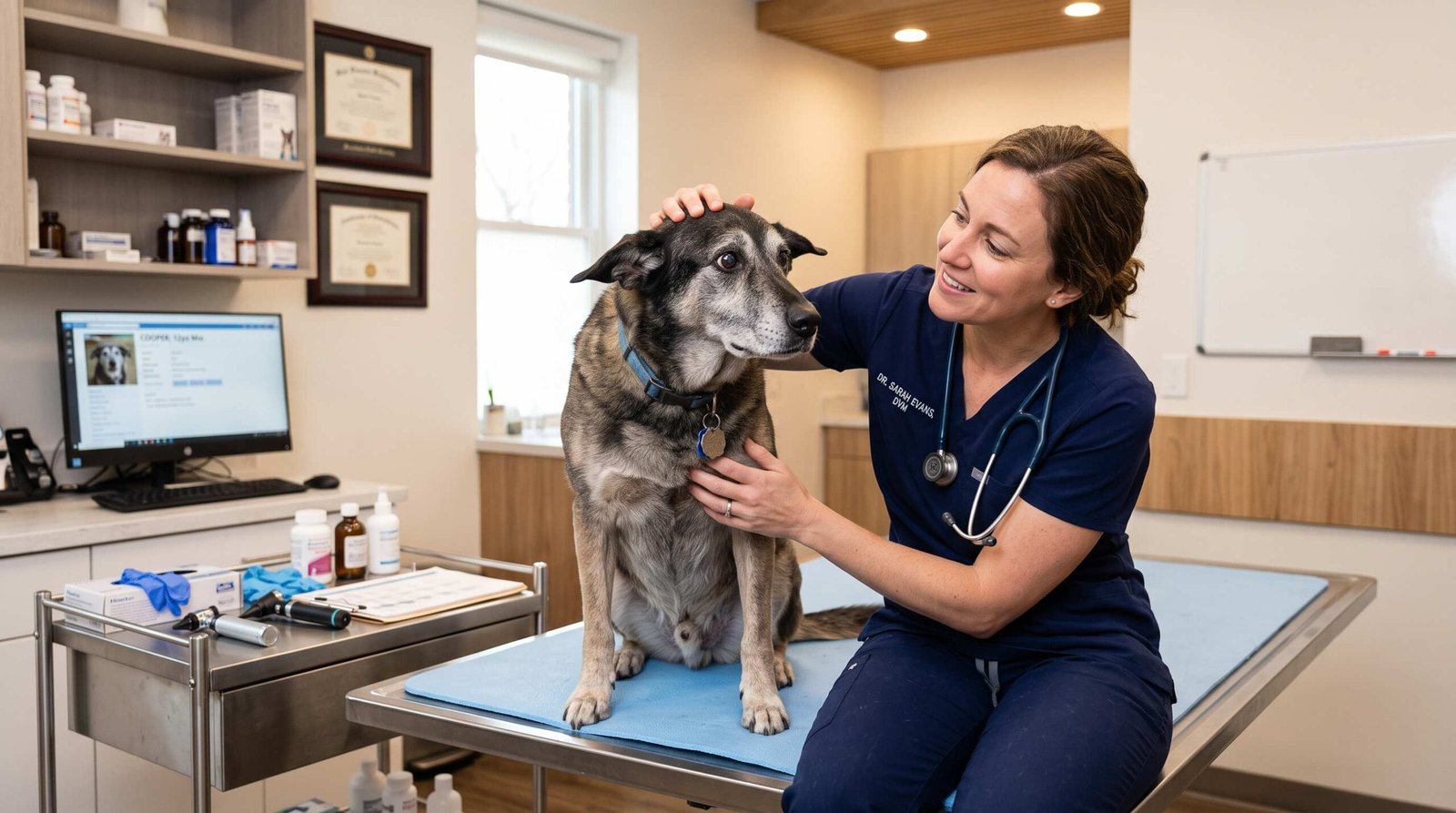
See your veterinarian soon if the anxiety is new and came on suddenly, which in an older dog is a red flag for pain or an underlying medical condition; if the signs are steadily worsening; if there are new urination or defecation accidents in a previously house-trained dog; or if the dog is causing any self-injury. Sudden behavioral change is medical until proven otherwise, especially in seniors.
Treat it as urgent when a dog is in severe panic, is harming itself through frantic escape attempts or self-mutilation, or is showing aggression that puts people or other animals at risk. Extreme acute episodes warrant same-day veterinary contact, both for the dog’s safety and to break the cycle before it entrenches.
Ask for a veterinary behaviorist referral when a case is complex, when a dog shows several overlapping anxiety types at once, or when there has been no meaningful response after roughly eight weeks of a well-executed plan. Board-certified veterinary behaviorists combine medical and behavioral expertise and are the right specialists for the cases that resist first-line treatment. Your regular veterinarian can make the referral.
Frequently Asked Questions
What are the main causes of anxiety in dogs?
The main causes are separation from attachment figures, fear triggers such as loud noises and unfamiliar people or places, age-related cognitive decline, and chronic pain. In older dogs especially, pain from arthritis or hip dysplasia and cognitive dysfunction syndrome are frequently overlooked drivers. Genetics and early-life under-socialization also raise a dog’s baseline risk.
Can anxiety in dogs be cured?
Many dogs improve dramatically with treatment, and some functionally resolve, but anxiety is often best thought of as managed rather than cured. Separation anxiety in particular has a strong prognosis with structured behavior modification and, where needed, medication. The realistic goal is a dog that copes comfortably with the situations that used to overwhelm it, and that outcome is achievable for the great majority of dogs.
Is it OK to comfort an anxious dog?
Yes. The old myth that comforting a frightened dog reinforces the fear is wrong. Fear is an emotional state, not a learned behavior, so it is not strengthened by operant reinforcement. The Tufts Cummings School of Veterinary Medicine confirms that providing calm, gentle comfort helps reduce a dog’s stress in the moment and does not make the fear worse. Stay calm yourself and offer steady, reassuring contact.
What medication is best for dog anxiety?
There is no single best medication; the right choice depends on the type of anxiety. For daily or separation anxiety, SSRIs such as fluoxetine (Reconcile) are first-line, with clomipramine (Clomicalm) as an alternative; both are FDA-approved for this use. For situational anxiety like storms or fireworks, short-acting trazodone or gabapentin given before the event works better. All anxiety medications require a veterinary prescription and individualized dosing.
How long does it take for dog anxiety medication to work?
It depends on the drug. Daily SSRIs and tricyclics like fluoxetine and clomipramine typically take four to six weeks to reach full effect, so they require patience and consistency. Situational medications such as trazodone and gabapentin act within hours and are given shortly before an anticipated trigger, usually about two hours ahead. Do not stop a daily medication early just because you see no immediate change.
Are there natural remedies for dog anxiety that actually work?
Some have moderate supporting evidence. Dog-appeasing pheromone products (Adaptil), L-theanine (Anxitane), and pressure wraps such as the Thundershirt have at least modest research behind them and strong safety records, and they work best alongside training. Melatonin can help senior dogs with nighttime anxiety. CBD and Rescue Remedy currently lack solid efficacy data in dogs. We suggest viewing supplements as adjuncts, not standalone cures, and discussing them with your veterinarian.
How do I know if my senior dog’s behavior is anxiety or just aging?
You often cannot tell them apart at home, which is exactly why a veterinary workup matters. Cognitive dysfunction syndrome, chronic pain, and sensory loss all produce behavior that looks like ordinary aging but is treatable. Nighttime pacing, disorientation in familiar rooms, new accidents, or a sudden personality change all warrant a vet visit rather than resignation. What looks like a dog simply getting old is frequently a dog that is anxious, uncomfortable, or cognitively affected.
What’s the difference between fear and anxiety in dogs?
Fear is a response to a present, identifiable threat; anxiety is the anticipation of a threat that has not yet arrived. A dog that reacts to a thunderclap is showing fear; a dog that grows agitated hours before a storm, reading the barometric cues, is showing anxiety. Fear is usually proportionate and resolves when the trigger passes, whereas clinical anxiety is disproportionate, persistent, and interferes with daily life.
Can separation anxiety in dogs be treated without medication?
Mild to moderate separation anxiety can often be managed with behavior modification alone, using the graduated departure protocol, counterconditioning, safe-space setup, and food-based enrichment. Medication becomes valuable when the anxiety is too intense for the dog to learn, or when progress stalls despite consistent training. For many dogs, the most effective and fastest path combines both, with medication creating the calm that allows the training to work.
When should I see a veterinary behaviorist?
Consider a board-certified veterinary behaviorist for complex cases, for dogs showing multiple overlapping anxiety types, for any anxiety involving aggression or self-injury, and when there has been no meaningful improvement after about eight weeks of a well-designed plan. These specialists integrate medical and behavioral expertise and are equipped for the cases that do not respond to first-line treatment. Your primary veterinarian can provide the referral.