

Carprofen for Dogs: Uses, Dosage, Side Effects, and What the Research Shows
September 1, 2026 | by Ian Adair
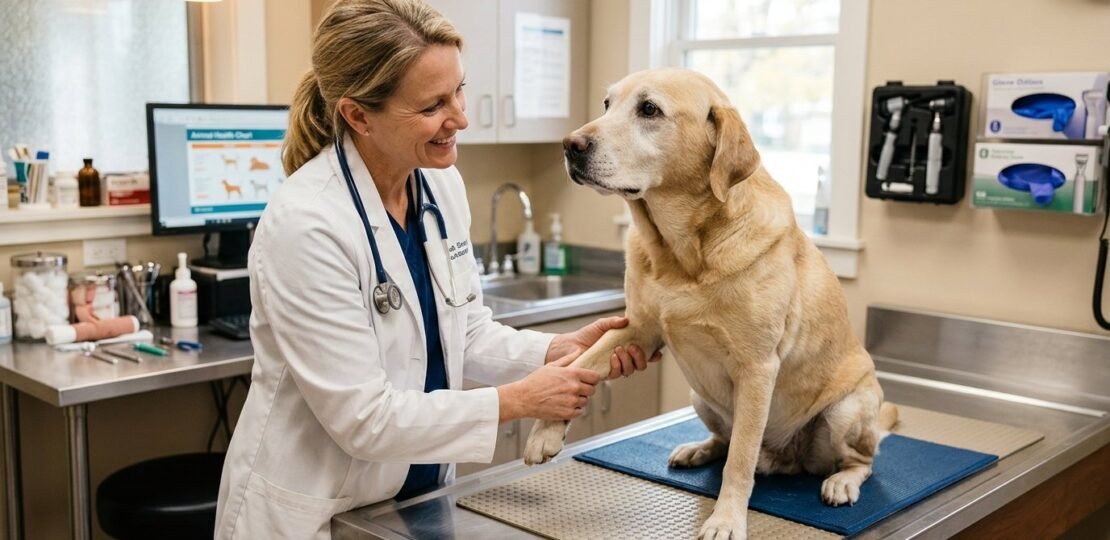
Carprofen for Dogs: Evidence-Based Guide to Dosage, Side Effects, and Safe Long-Term Use
Carprofen is a non-steroidal anti-inflammatory drug (NSAID) prescribed to dogs for pain and inflammation, most often from osteoarthritis or surgery. The FDA-approved dose is 4.4 mg/kg once daily or 2.2 mg/kg twice daily. Sold as Rimadyl, Novox, and generics, it relieves pain within one to two hours and is generally safe with veterinary monitoring.
If your veterinarian has prescribed carprofen, you are giving your dog one of the most widely used and best-studied pain medications in veterinary medicine. It has controlled arthritis pain in millions of dogs since the FDA approved it in 1996. This guide covers exactly how it works, how it is dosed by weight, what changes for senior dogs, the side effects worth watching, and how carprofen compares to the newer NSAIDs your vet might mention. The goal is to help you use it confidently and safely over the long haul.
What Is Carprofen for Dogs?
Carprofen is a non-steroidal anti-inflammatory drug in the propionic acid class, the same broad family as human ibuprofen and naproxen, but formulated and dosed specifically for dogs. It reduces pain, inflammation, and fever by blocking cyclooxygenase (COX) enzymes, which the body uses to manufacture prostaglandins. Prostaglandins drive the swelling, heat, and pain of inflammation, so shutting down their production calms the inflammatory response and eases discomfort.
The COX pathway comes in two main forms. COX-1 produces the “housekeeping” prostaglandins that protect the stomach lining, maintain kidney blood flow, and support normal platelet function. COX-2 produces the prostaglandins that mediate inflammation and pain. Carprofen is best described as a preferential COX-2 inhibitor: it blocks the inflammatory COX-2 pathway more than the protective COX-1 pathway. This partial selectivity is why carprofen produces fewer gastrointestinal and kidney side effects than non-selective NSAIDs like aspirin or ibuprofen, which hit COX-1 and COX-2 with equal force and strip away stomach protection in the process. Carprofen preserves more of that protective COX-1 activity while still delivering strong anti-inflammatory relief.
Carprofen comes in caplets, highly palatable chewable tablets, and an injectable form used mainly in clinics around surgery. The oral forms are what owners handle at home. Brand and generic options are widely available, and they are therapeutically equivalent because they share the same active ingredient. The VCA Hospitals carprofen guide is a useful reference kept in plain language for owners.
| Brand / Product | Manufacturer | Forms Available | FDA Approval Status |
|---|---|---|---|
| Rimadyl (original brand) | Zoetis (formerly Pfizer) | Chewable tablets, caplets, injectable | FDA-approved |
| Novox | Originally Pfizer/Impax; generics under this name | Caplets | FDA-approved generic |
| Quellin | Bayer / Elanco | Soft chewable tablets | FDA-approved generic |
| Vetprofen | Norbrook | Caplets | FDA-approved generic |
| TruProfen | Ceva | Chewable tablets | FDA-approved generic |
| Carprieve | Norbrook | Chewable tablets, caplets | FDA-approved generic |
| Generic carprofen | Multiple manufacturers | Caplets, chewables | FDA-approved generic |
| Compounded carprofen | Compounding pharmacies | Custom liquids, capsules, doses | Not FDA-approved (vet-directed) |
What Carprofen Is Used for in Dogs
Carprofen carries FDA approval for two primary uses: the relief of pain and inflammation from osteoarthritis, and the control of post-surgical pain following soft tissue and orthopedic procedures. These are the labeled indications, meaning the manufacturer submitted controlled data to the FDA proving safety and efficacy for them.
Osteoarthritis is by far the most common reason dogs stay on carprofen. The degenerative joint changes behind it develop slowly and worsen with age, which is why so many senior dogs end up on a daily dose. The evidence base for carprofen in arthritis is strong. The landmark Lipscomb and colleagues 2002 study tracked clinical response and pharmacokinetics in dogs with osteoarthritis over 28 days and documented steady, measurable improvement in lameness and comfort. Earlier work, including the Vasseur and colleagues 1995 randomized controlled trial, established carprofen’s benefit for arthritic dogs against placebo and helped secure its original approval.
Veterinarians also prescribe carprofen off-label for conditions outside the FDA label when clinical judgment supports it. These include tendon and ligament injuries, general soft tissue pain, back pain and spinal discomfort, and certain NSAID-responsive cancers. There is genuine interest in NSAIDs as adjuncts in cancers that overexpress COX-2, such as transitional cell (bladder) carcinoma and prostate carcinoma, where prostaglandin blockade may slow tumor activity. Off-label use is legal, common, and evidence-guided, but it should always come from your veterinarian rather than your own experimentation.
Carprofen Dosage for Dogs: Weight-Based Guide
The FDA-approved carprofen dose for dogs is 4.4 mg/kg given once daily, or split into 2.2 mg/kg given twice daily. Both schedules deliver the same total daily amount. Many veterinarians prefer the twice-daily (BID) split because smaller, more frequent doses tend to sit easier on the stomach and produce steadier blood levels across the day, which can improve gastrointestinal tolerance in sensitive dogs.
The table below converts those figures into rough milligram amounts by body weight so you can sanity-check what you have been given. Read it as a reference only. Carprofen tablets come in 25 mg, 75 mg, and 100 mg strengths, so your vet will round to a practical combination of whole and half tablets. The dose your veterinarian sets always overrides any general chart, because it accounts for your dog’s kidneys, liver, other medications, and overall health.
| Dog Weight | Weight (kg) | Once Daily Total (4.4 mg/kg QD) | Twice Daily, Each Dose (2.2 mg/kg BID) |
|---|---|---|---|
| 10 lb | 4.5 kg | ~20 mg once daily | ~10 mg every 12 hours |
| 25 lb | 11.3 kg | ~50 mg once daily | ~25 mg every 12 hours |
| 50 lb | 22.7 kg | ~100 mg once daily | ~50 mg every 12 hours |
| 75 lb | 34.0 kg | ~150 mg once daily | ~75 mg every 12 hours |
| 100 lb | 45.4 kg | ~200 mg once daily | ~100 mg every 12 hours |
Reference only. Do not adjust your dog’s dose based on this table. Always follow the exact dose and schedule your veterinarian prescribes.
If you miss a dose, give it when you remember, then resume the normal schedule. Never double up to catch up, and never give an extra dose because your dog seems sore. If you feel the current dose is not controlling pain, call your vet rather than increasing it yourself. Carprofen is one of several tools in canine pain management, and your veterinarian may layer in other pain medication for dogs rather than pushing the NSAID dose higher.
Carprofen for Senior Dogs: What Changes
Senior dogs are the population most likely to be on carprofen and the population most vulnerable to its risks, which makes this the section worth reading twice. The drug is not more dangerous because a dog is old, but aging physiology changes how the body handles it, and older dogs carry more of the conditions that raise the stakes.
The first change is renal. Glomerular filtration rate (GFR), the kidney’s basic filtering capacity, declines with age even in dogs that look perfectly healthy. Carprofen is cleared largely through hepatic metabolism, but reduced kidney function combined with age-related shifts in drug handling can extend its practical half-life, and dogs with sub-clinical kidney disease may accumulate the drug more than a young, robust dog would. Because carprofen also suppresses the prostaglandins that keep blood flowing through the kidney under stress, a senior kidney with less reserve has less margin for error. This is why baseline bloodwork before starting and more frequent rechecks afterward are non-negotiable in older dogs.
The second change is gastrointestinal. The stomach and intestinal lining depend on COX-1-derived prostaglandins to maintain their protective mucus layer and blood supply. Older dogs synthesize fewer of these protective prostaglandins to begin with, so the mucosal barrier is thinner and slower to repair. Layering an NSAID on top of an already diminished defense raises the risk of erosions and ulcers compared with a young dog on the same dose.
The third change is comorbidity. Senior dogs frequently carry conditions that turn carprofen from routine to risky. Congestive heart failure treated with diuretics, chronic kidney disease, and liver disease all interact badly with NSAIDs, and each raises the contraindication risk when carprofen is added. A dog on furosemide for heart failure, for example, is already running lean on fluid volume, and an NSAID can tip fragile kidneys into injury.
For these reasons, many veterinarians take a “start low, go slow” approach with older dogs, sometimes beginning at around 2 mg/kg once daily rather than the full labeled dose and titrating up only if the lower amount fails to control pain and bloodwork stays clean. The two conditions that most often bring a senior dog to carprofen in the first place are arthritis in dogs and hip dysplasia in dogs, both degenerative joint problems that become more common and more painful as dogs age.
How Long Does Carprofen Take to Work in Dogs?
Carprofen begins working quickly. Blood levels peak within one to three hours of an oral dose, and many owners notice their dog moving more easily within the first one to two hours. For acute pain, such as after surgery, that fast onset is the point.
Chronic arthritis is different. While the immediate anti-inflammatory effect starts on day one, the full benefit for a stiff, chronically inflamed joint builds over days to a couple of weeks as inflammation settles and the dog begins using the limb normally again. The 28-day Lipscomb 2002 study is instructive here: dogs kept improving across the full month of treatment, not just in the first few days, which means you should not judge carprofen’s ceiling from the first weekend. Give it one to two weeks of consistent daily dosing before deciding whether it is doing enough.
The duration of a single dose runs roughly 12 to 24 hours depending on the individual dog and the dose given. This variability explains why some dogs do beautifully on once-daily dosing while others fade by evening and do better split into two daily doses. If your dog seems comfortable in the morning but stiff again at night on a once-daily schedule, that is worth mentioning to your vet, who may switch to twice-daily dosing to smooth out the coverage.

Side Effects of Carprofen in Dogs
Most dogs tolerate carprofen well, but every NSAID carries risk, and knowing what to watch for lets you catch problems early. Side effects sort into common and generally mild versus rare and serious.
The common effects are gastrointestinal: vomiting, diarrhea, constipation, reduced appetite, and lethargy. These often appear early and frequently resolve if the drug is given with food or the dose is adjusted. Giving each dose with a small meal is the single easiest step to reduce stomach upset.
The serious effects are uncommon but demand respect. They include gastrointestinal ulceration and hemorrhage, kidney damage, and idiosyncratic liver toxicity. The liver reaction is the one that unsettles owners most: it is unpredictable, not dose-dependent, affects fewer than roughly 0.05 percent of treated dogs, and can occur after only one or two doses in a susceptible animal. “Idiosyncratic” means it does not follow the usual rules of more drug equals more harm, which is exactly why baseline and follow-up bloodwork matter.
| Severity | Signs | What to Do |
|---|---|---|
| Common / Mild (GI) | Vomiting, diarrhea, constipation, reduced appetite, mild lethargy | Give with food; call your vet if it persists beyond a day or two or worsens |
| Serious (GI ulcer/bleed) | Black tarry stool, blood in vomit, severe abdominal pain, pale gums | Stop the drug and seek veterinary care the same day |
| Serious (liver) | Yellowing of gums/eyes (jaundice), marked appetite loss, increased thirst, vomiting | Stop the drug and contact your vet immediately for bloodwork |
| Serious (kidney) | Increased or decreased urination, increased thirst, lethargy, appetite loss | Stop the drug and contact your vet for renal bloodwork |
One risk deserves special emphasis because it is entirely preventable: accidental overdose. Rimadyl chewable tablets are formulated to taste like a treat, and dogs will eat an entire bottle if given the chance. A massive ingestion causes acute gastrointestinal injury, liver toxicity, and kidney damage all at once. Store the bottle where your dog absolutely cannot reach it, treating it with the same caution you would give a bottle of human medication. If your dog ingests a large number of carprofen tablets accidentally, call your vet or ASPCA Animal Poison Control immediately. Do not wait for symptoms. Because serious adverse reactions can occur without any warning sign, quick action after a known overdose is what protects the organs.
Drug Interactions and Contraindications
Some dogs should not receive carprofen at all, and some medications should never be combined with it. Dogs with Von Willebrand disease or other bleeding disorders, dogs with low platelet counts, dogs with a known NSAID or aspirin allergy, and any dog currently taking another NSAID or a corticosteroid should not be given carprofen. Use it only with caution and close veterinary oversight in puppies under six months, pregnant or nursing dogs, severely dehydrated dogs, and dogs with existing liver, kidney, heart, or gastrointestinal disease.
| Interacting Drug | Severity | Concern |
|---|---|---|
| Other NSAIDs (meloxicam, deracoxib, etc.) | HIGH | GI ulcers and hemorrhage from additive COX suppression |
| Corticosteroids / prednisone | HIGH | Severe GI ulceration risk; never combine an NSAID and a steroid |
| Aspirin | HIGH | Additive GI and renal injury; also prolonged bleeding |
| Anticoagulants | MODERATE | Increased bleeding risk |
| ACE inhibitors (enalapril, benazepril) | MODERATE | Reduced kidney protection and blunted blood-pressure control |
| Furosemide / diuretics | MODERATE | Reduced diuretic efficacy plus added renal risk from lower fluid volume |
| Cyclosporine | MODERATE | Increased nephrotoxicity |
| Insulin | LOW | Possible altered glucose regulation; monitor diabetic dogs |
The NSAID Washout Protocol
This step is skipped in most owner-facing guides, and getting it wrong is dangerous. When a dog is switching from one NSAID to another, or coming off a steroid before starting an NSAID, there must be a drug-free washout period in between. You should never overlap two NSAIDs, and you should never overlap an NSAID with a corticosteroid, because the combination multiplies the risk of severe gastrointestinal ulceration and bleeding.
The practical guidance most veterinarians follow is a washout of roughly five to seven days when transitioning off a previous NSAID before starting carprofen, giving the first drug time to clear and the stomach lining time to recover. Transitioning off a corticosteroid such as prednisone requires a similar washout, typically about seven days for standard oral steroids and considerably longer for long-acting injectable steroids, which can suppress protective prostaglandins for weeks. If your dog was on either type of drug recently, tell your veterinarian the exact date of the last dose so the washout can be timed correctly. This single precaution prevents a meaningful share of the worst NSAID complications.
Monitoring Your Dog on Long-Term Carprofen
Long-term carprofen is safe for most dogs, but that safety depends on monitoring rather than luck. The plan is straightforward: establish a healthy baseline before the first dose, recheck early to catch trouble, then settle into a routine of periodic bloodwork for as long as the dog stays on the drug.
| Timepoint | Tests to Run | What to Look For | Action if Abnormal |
|---|---|---|---|
| Baseline (before starting) | CBC + chemistry panel, urinalysis | Existing liver, kidney, or blood abnormalities | Delay or choose an alternative drug if values are off |
| 2 to 4 weeks after start | Chemistry panel (liver + kidney values) | Early rise in liver enzymes or kidney markers | Stop drug and reassess if enzymes climb |
| Every 3 to 6 months long-term | CBC + chemistry panel, urinalysis | Trends in liver, kidney, and blood values over time | Adjust dose, pause, or switch drugs as indicated |
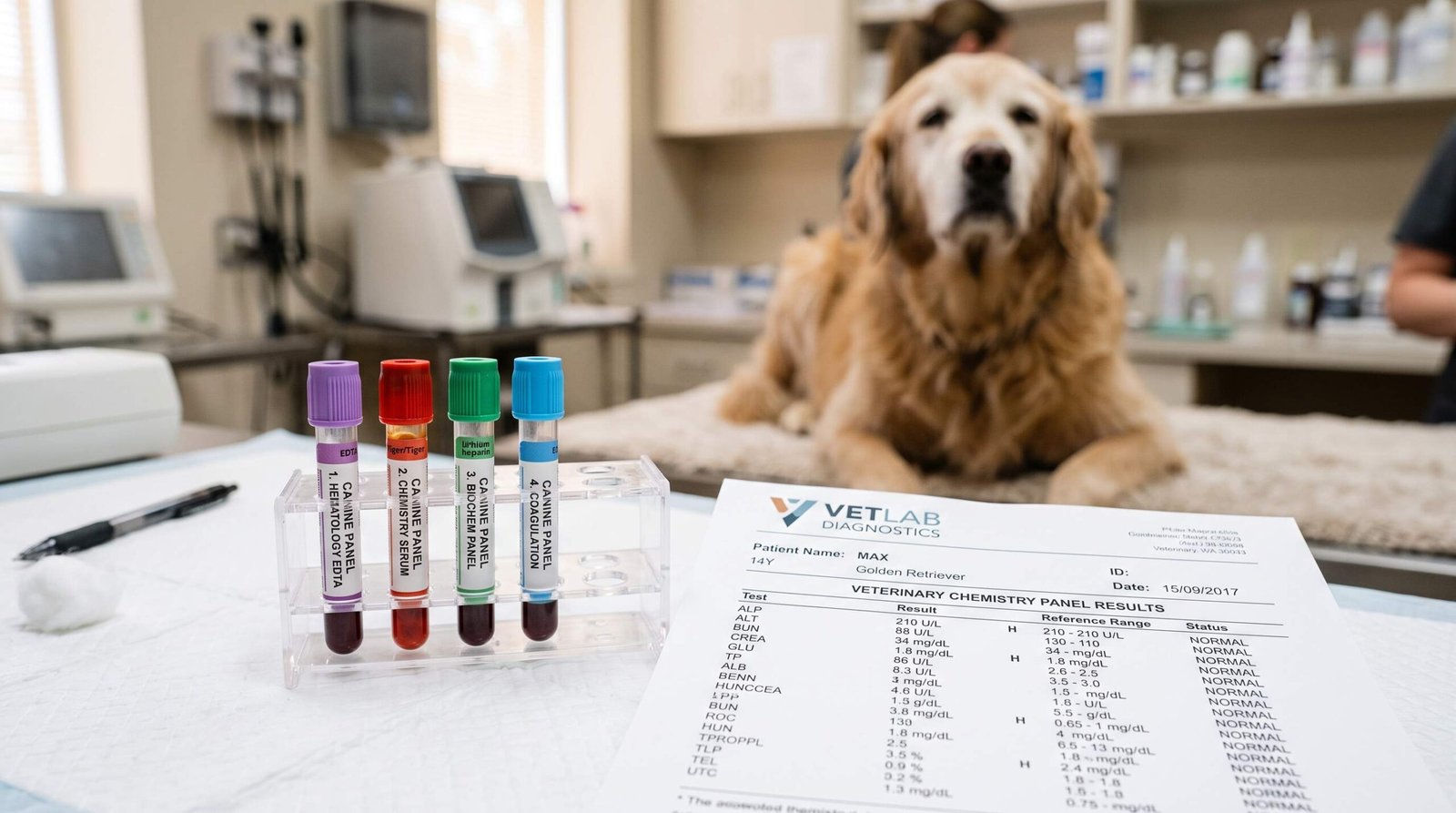
The specific blood values your veterinarian watches are ALT and ALP for the liver, BUN and creatinine for the kidneys, and urine specific gravity from the urinalysis, which reflects how well the kidneys are concentrating urine. A rising ALT or ALP can be the first sign of liver stress before your dog looks sick, and that is precisely why the early recheck exists.
Certain signs should prompt an immediate vet visit regardless of when the next scheduled recheck falls: yellowing of the gums or eyes, black or tarry stool, blood in vomit, a sudden change in thirst or urination, or a marked loss of appetite. Any of these can signal a serious reaction developing.
Monitoring matters because carprofen-associated liver disease, the idiosyncratic hepatopathy mentioned earlier, can appear suddenly and without a dose-related warning. Some dogs appear to be genetically more susceptible, and there is a longstanding anecdotal observation among veterinarians that Labrador Retrievers may be over-represented in reported carprofen hepatopathy cases. Treat that as an anecdotal observation rather than a firmly established fact, since it has not been cleanly proven in controlled studies, but it is reasonable grounds for extra vigilance in the breed. Regular bloodwork is how you turn an unpredictable risk into a manageable one.
Carprofen vs. Other NSAIDs for Dogs
Carprofen is not the only NSAID your vet can choose, and understanding the alternatives helps you follow the reasoning behind a switch. The main players are carprofen (Rimadyl), meloxicam (Metacam), deracoxib (Deramaxx), and grapiprant (Galliprant). The last one is technically not a traditional NSAID at all.
| Drug | Class / COX Selectivity | FDA Approved (Dogs) | Dosing Frequency | GI Risk | Renal Risk | Approved for Senior Dogs | Approx. Cost / Month |
|---|---|---|---|---|---|---|---|
| Carprofen (Rimadyl) | NSAID, preferential COX-2 | Yes | Once or twice daily | Moderate | Moderate | Yes | $15-40 (generic much less) |
| Meloxicam (Metacam) | NSAID, preferential COX-2 | Yes | Once daily | Moderate | Moderate | Yes | $20-45 |
| Deracoxib (Deramaxx) | NSAID (coxib), more COX-2 selective | Yes | Once daily | Low to moderate | Moderate | Yes | $30-60 |
| Grapiprant (Galliprant) | Piprant (EP4 receptor blocker, not a COX inhibitor) | Yes | Once daily | Low | Low | Yes | $50-90 |
The practical decision framework runs like this. Carprofen is well-established, extensively studied, and cheap in generic form, which makes it a sensible first choice for a healthy dog with straightforward arthritis. Meloxicam offers similar efficacy with the convenience of once-daily dosing. Deracoxib is more COX-2 selective and often used around orthopedic surgery. Grapiprant is the newest and mechanistically different: as a piprant it blocks the EP4 prostaglandin receptor rather than inhibiting COX enzymes, so it spares more of the protective prostaglandin functions and carries a lower gastrointestinal and renal risk profile. That makes grapiprant an appealing option for dogs with GI sensitivity or early kidney disease, though it costs more.
On the head-to-head evidence, the Moreau and colleagues 2003 study compared carprofen, meloxicam, and a nutraceutical in 71 dogs with osteoarthritis. Both NSAIDs improved the dogs meaningfully, with meloxicam showing a slightly stronger objective force-plate improvement, while the nutraceutical did not separate from placebo. Notably, one dog in the carprofen group developed a hepatopathy during the trial, a real-world reminder of the idiosyncratic liver risk. Efficacy between the two NSAIDs is close enough that tolerance, dosing convenience, and cost often decide the choice.
Rimadyl vs. Generic Carprofen vs. Other Brands
Rimadyl is the original FDA-approved carprofen product, made by Zoetis, which was formerly the animal health division of Pfizer. It came to market in 1996 and set the standard the generics were later measured against. Because carprofen’s patent has long since expired, several authorized generics now compete on price while delivering the identical active ingredient.
Novox is a well-known name in this space; the product line has shifted hands over the years, and generic carprofen still sells under that label. Quellin, Vetprofen, TruProfen, and Carprieve are other FDA-approved generic and brand options, available as caplets or flavored chewables. All of them meet the same FDA manufacturing and bioequivalence standards as Rimadyl, which means a generic carprofen tablet works the same way in your dog’s body as the brand-name version. The differences come down to flavoring, tablet format, and price.
Compounded carprofen occupies a separate category. Compounding pharmacies can prepare custom strengths, liquid suspensions, or capsule forms for dogs who cannot take standard tablets, perhaps a very small dog needing an unusual dose or a dog that refuses pills. Compounded formulations are not FDA-approved and their consistency is not held to the same standard as manufactured products, but a veterinarian may still recommend them when no commercial form fits the dog. Use compounded carprofen only under direct veterinary direction.
For owners managing lifelong arthritis, the cost gap is worth taking seriously. Brand-name Rimadyl can cost several times what an authorized generic costs, and over months or years of daily dosing in a large dog, that difference adds up to real money. Ask your veterinarian whether a generic is appropriate, since for most dogs it is an easy way to reduce the expense of long-term care without compromising the medication.
Frequently Asked Questions
Is carprofen a steroid?
No. Carprofen is a non-steroidal anti-inflammatory drug, which the name itself makes explicit. It reduces inflammation by blocking cyclooxygenase enzymes, not by acting through the adrenal steroid pathway that corticosteroids like prednisone use. This is more than a technicality. NSAIDs and steroids both irritate the gastrointestinal tract through overlapping mechanisms, so combining them is dangerous, and knowing carprofen is an NSAID rather than a steroid is exactly what tells you not to stack it on top of a steroid.
Can carprofen be given with gabapentin?
Yes. Carprofen and gabapentin are a common and complementary pairing for canine arthritis and chronic pain. They work through entirely different mechanisms: carprofen reduces inflammation at the joint, while gabapentin for dogs quiets the neuropathic, nerve-driven component of pain. There is no direct pharmacological conflict between them, and multimodal pain control that combines drugs from different classes often works better than pushing any single drug to its limit. Some dogs also receive trazodone for dogs alongside these when anxiety or rest is part of the picture, though that combination should be vet-directed.
Can carprofen be given with food?
Yes, and giving it with food is the better habit. Carprofen can technically be given with or without a meal, but food buffers the stomach and reduces the chance of nausea, vomiting, and irritation of the gastric lining. Pairing each dose with a small amount of food is one of the simplest ways to improve tolerance, and it matters most in senior dogs whose stomach defenses are already reduced.
How long can a dog stay on carprofen?
Dogs can stay on carprofen for years when it controls a chronic condition and bloodwork stays normal. Long-term use is the norm for arthritis, not an exception. The Payne-Johnson and colleagues 2015 study documented sustained efficacy over 134 days with an 89.1 percent improvement rate, illustrating that the benefit holds up over months of continuous use. The requirement that makes long-term use safe is monitoring: periodic liver, kidney, and blood testing every three to six months so any developing problem is caught early.
What if my dog ate the whole bottle of Rimadyl?
Treat it as a medical emergency and act immediately. Rimadyl chewables are flavored to be palatable, and a dog that gets into the bottle will often eat all of it. A large overdose causes simultaneous gastrointestinal, liver, and kidney toxicity that can be life-threatening. Call your veterinarian or ASPCA Animal Poison Control right away, and do not wait for symptoms to develop, because early decontamination and supportive care give the best chance of a good outcome.
Can carprofen cause kidney failure in dogs?
It can, but the risk is low in healthy, well-hydrated dogs and much higher in vulnerable ones. Carprofen suppresses prostaglandins that help maintain blood flow to the kidneys, a mechanism that healthy kidneys barely miss but that compromised kidneys depend on. Dogs with pre-existing chronic kidney disease, dehydration, low blood pressure, or concurrent diuretic use carry the elevated risk. This is why baseline bloodwork, adequate hydration, and ongoing renal monitoring are central to safe use, and why carprofen is used cautiously or avoided in dogs with known kidney disease.
Can I give my dog human carprofen or ibuprofen instead?
Absolutely not. Human NSAIDs such as ibuprofen, naproxen, and aspirin are toxic to dogs and cause gastrointestinal ulcers, kidney failure, and death at doses that people tolerate without trouble. Dogs metabolize these drugs very differently. Carprofen is a dog-specific medication, dosed and formulated for canine physiology, and it should only ever be the version your veterinarian prescribed. Never reach into your own medicine cabinet to treat your dog’s pain.
Is Rimadyl the same as carprofen?
Yes. Rimadyl is simply the original brand name for the drug carprofen, made by Zoetis. Generic carprofen and other brands such as Novox, Quellin, Vetprofen, TruProfen, and Carprieve contain the exact same active ingredient, manufactured to the same FDA standards. The practical differences are flavor, tablet format, and price, not the medicine itself, so a generic carprofen works the same way in your dog as brand-name Rimadyl.
RELATED POSTS
View all

Glucosamine for Dogs: What the Research Actually Shows About Dosage, Forms, and Senior Joints
June 3, 2026 | by Ian Adair
Arthritis in Dogs: Symptoms, Stages, and Treatment Options That Actually Work
December 22, 2023 | by seniorsniffs.com
Prednisone for Dogs: Uses, Dosage, Side Effects, and What the Research Shows
October 1, 2026 | by Ian Adair